What is query fan-out? It is when an AI service splits one question into several searches, retrieves pages for each of them and assembles the answer from what it finds. The buyer asks one question. Behind the scenes, it may run a handful of searches you never see.
Google describes it itself. Its documentation on AI features in Search says that AI Overviews and AI Mode may use “query fan-out”: multiple related searches across subtopics and data sources to build the answer.
Take the question “who supplies ballast water treatment in Norway?” The AI tool might look for approved systems, suppliers with references from Norwegian shipowners and what it costs. Each of the searches returns its own pages. The answer draws on all of them.
Because you can be cited without ranking for what the buyer typed. A page that answers one of the sub-questions well can make it into the answer even if it doesn't rank at the top for the main question. That gives you more ways in, but also more pages to compete with.
Google AI Overview links to twice as many web pages per answer as ChatGPT, according to K—lab's report on the platforms. More sources per answer means more chances to be cited. It also means the buyer sees more names.
It also explains why a page is sometimes cited without covering the whole question. It gave a precise answer to one of the sub-searches. Broad pages without clear answers lose to narrow pages with clear answers.
A page on “ballast water treatment pricing” that says what it costs and what affects the price fits one sub-search well. A homepage that promises “solutions for the maritime industry” fits none of them.
Think in sub-questions, not keywords.
The method is the same as in the guide to getting visible in AI search. Fan-out makes it more worthwhile to cover a topic broadly, with many pages that each answer something specific.
Not always. Google does not show the fan-out searches openly. Search Console has a report for generative AI in Google Search that shows how your pages perform. You rarely see what ChatGPT and Copilot search for.
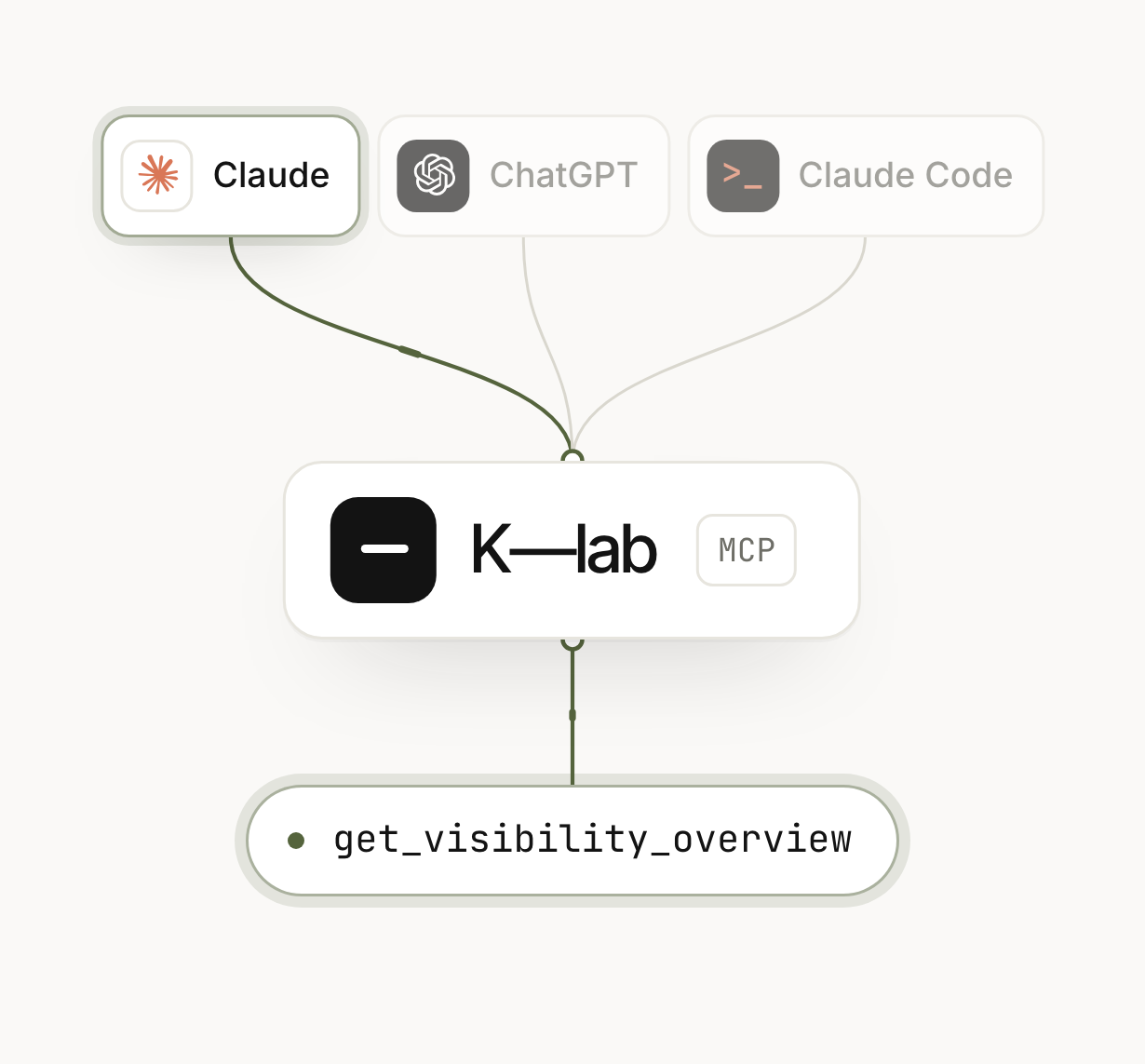
So you have to measure the outcome: how often you are mentioned when the buyer asks the question. Ask many times, over time and on several platforms, since the answers vary. K—lab Cited shows both who is mentioned instead of you and which sources the answer is based on.
Want to see which sources AI uses about you? Get the free report from K—lab.
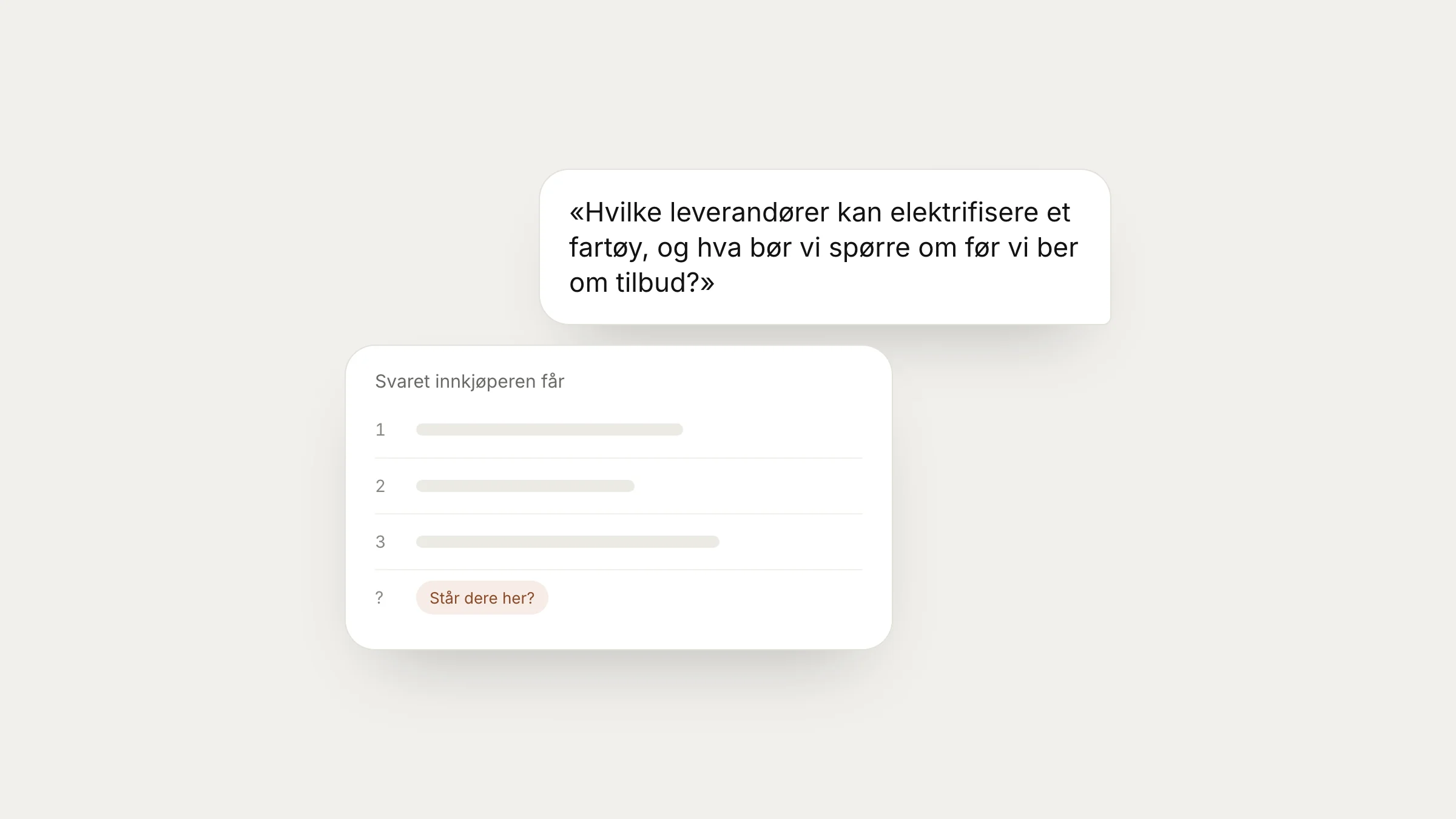
B2B companies with deep expertise should be chosen for what they can do, even when the buyer asks AI first. Here are the surveys, the numbers and where K—lab itself stands.
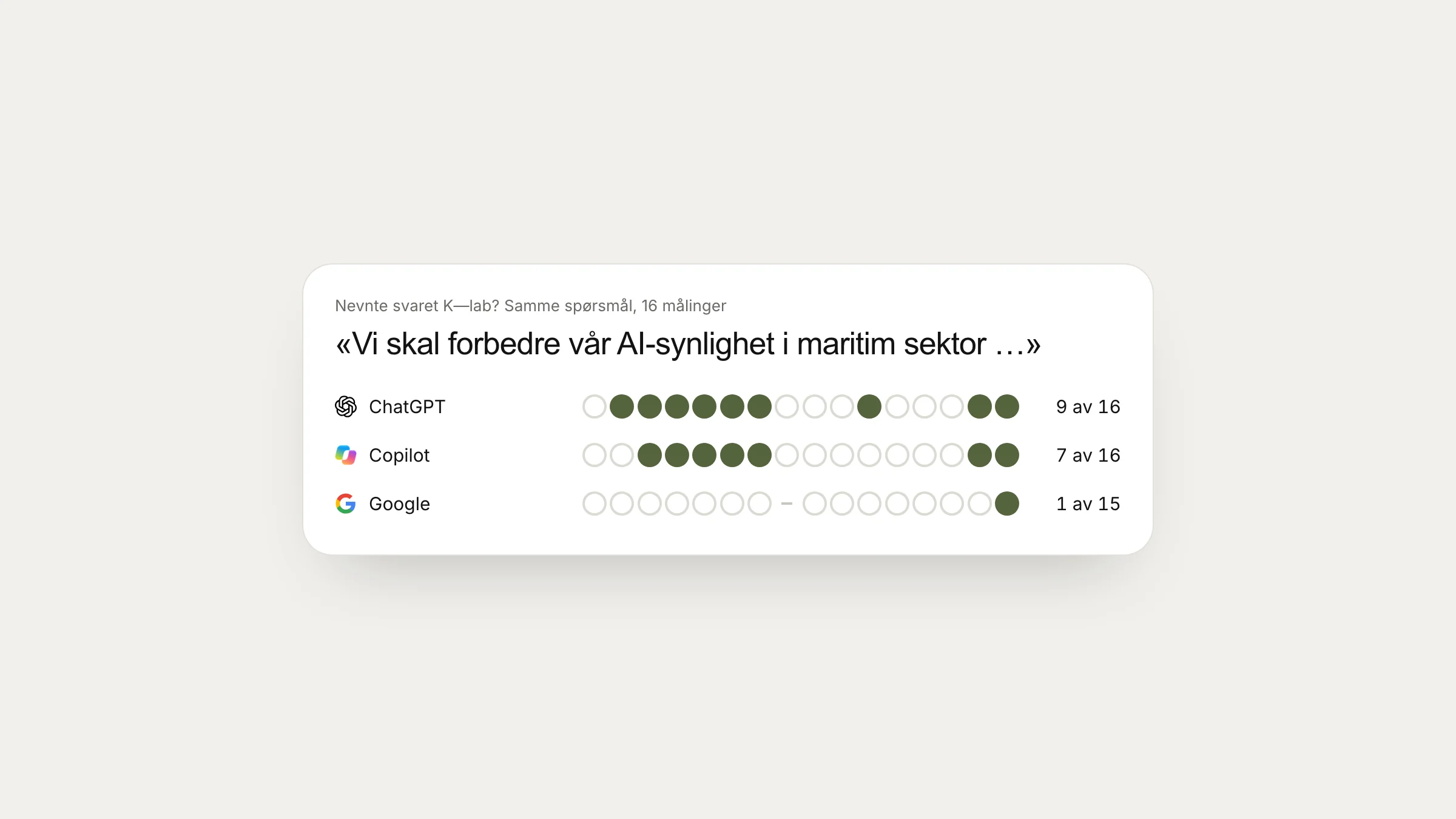
We asked ChatGPT and Copilot buyer questions every other day for a month. See how much the answers change, and why a single answer is only a snapshot.
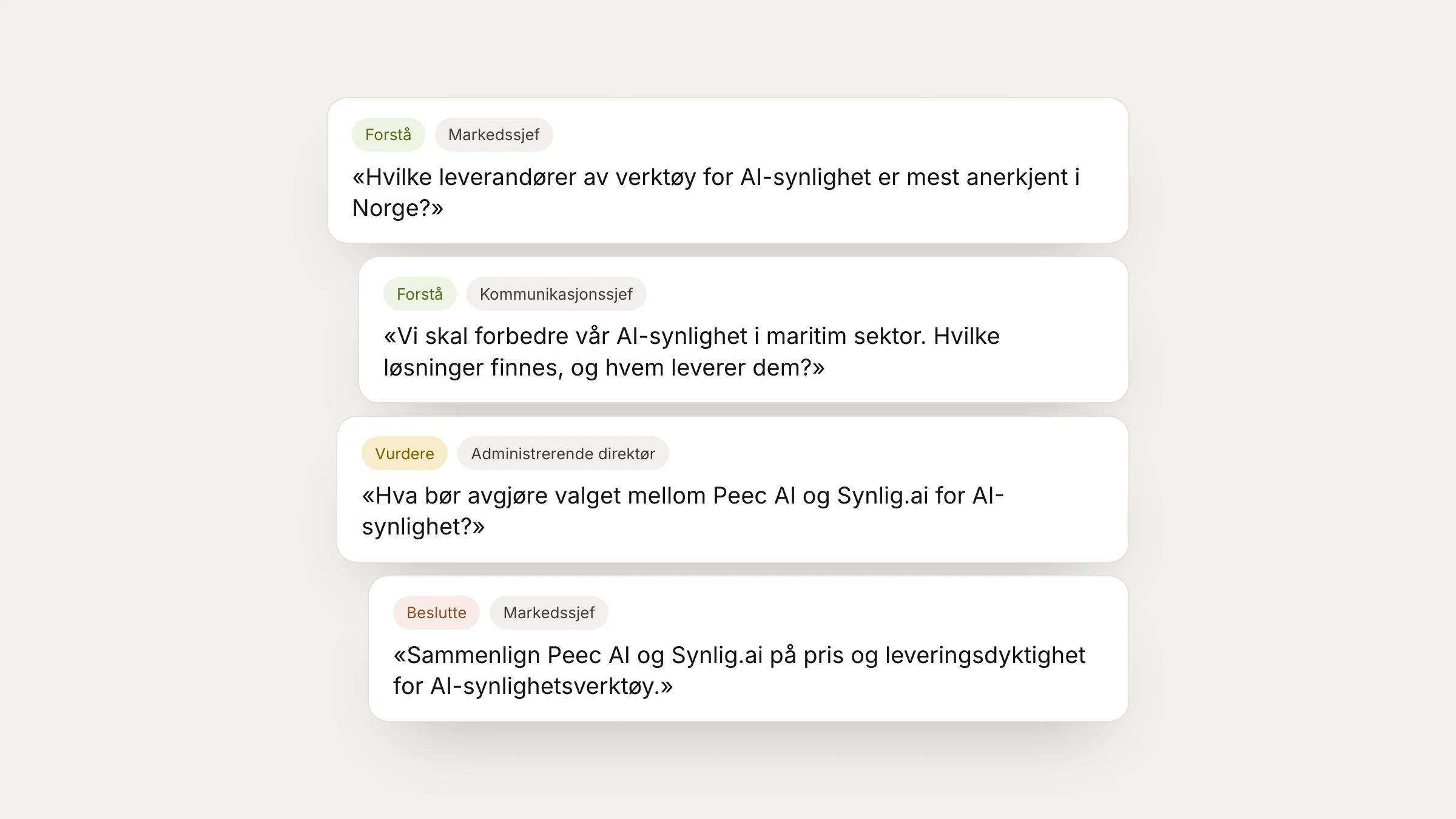
K—lab asks buyer questions written from buying situations in industry and the maritime sector. Here is how they are chosen, and how to build your own list.
Spend less time gathering and explaining results. Spend more time on the actions that actually deserve attention.