Often the reason is not that the competitor is better. They are simply easier to understand.
AI can only work with what actually exists.
If the competitor has clearer service pages, more concrete case studies, better documentation or stronger coverage in external sources, AI has more to build its answer on.
That can give them a head start long before the customer gets in touch.
Many companies describe themselves well, but not necessarily in the way customers search.
That is an important difference.
Customers tend to ask about a need, a problem, a solution or who has experience with a particular type of project.
If the competitor answers exactly these questions more clearly, the chance that they get highlighted goes up.
That does not necessarily mean they have more expertise.
It means their expertise is easier to find and understand.
Claims alone carry little weight.
Case studies, project descriptions, certifications, results and concrete examples make it easier to understand what a company has actually delivered.
For complex B2B companies, this can be decisive.
You may have ten years of experience in a market. But if that experience is barely visible in public, it is hard for both the customer and AI to know about it.
A company's image is not shaped only on its own website.
Trade media, news stories, partners and other external sources can help make a position clearer.
That is also why two companies that describe themselves quite similarly on their own websites can get completely different visibility in AI.
One of them may have more independent sources confirming its experience, expertise or position.
This may be the most interesting difference.
A company can offer a lot and still be hard to place.
If everything is important, it also becomes harder to understand what you should actually be the first choice for.
K—lab Strategy points to exactly this gap between what a company wants to be known for and what the market actually associates it with.
The same applies in AI.
If, over time, a competitor is clearer about one type of expertise, one market or one strength, it can be easier for AI to connect them to relevant questions.
If your competitors are more visible, the answer is not automatically to produce more content.
First look at why they come up.
Cited is designed to make exactly this visible: which competitors get the head start, what they are highlighted for and which sources are behind the answers.
Then you go from:
“The competitor is more visible than us.”
to something you can actually use:
“The competitor gets chosen because they document this experience more clearly. This is the gap we should close.”
That is a much better starting point for your next move.
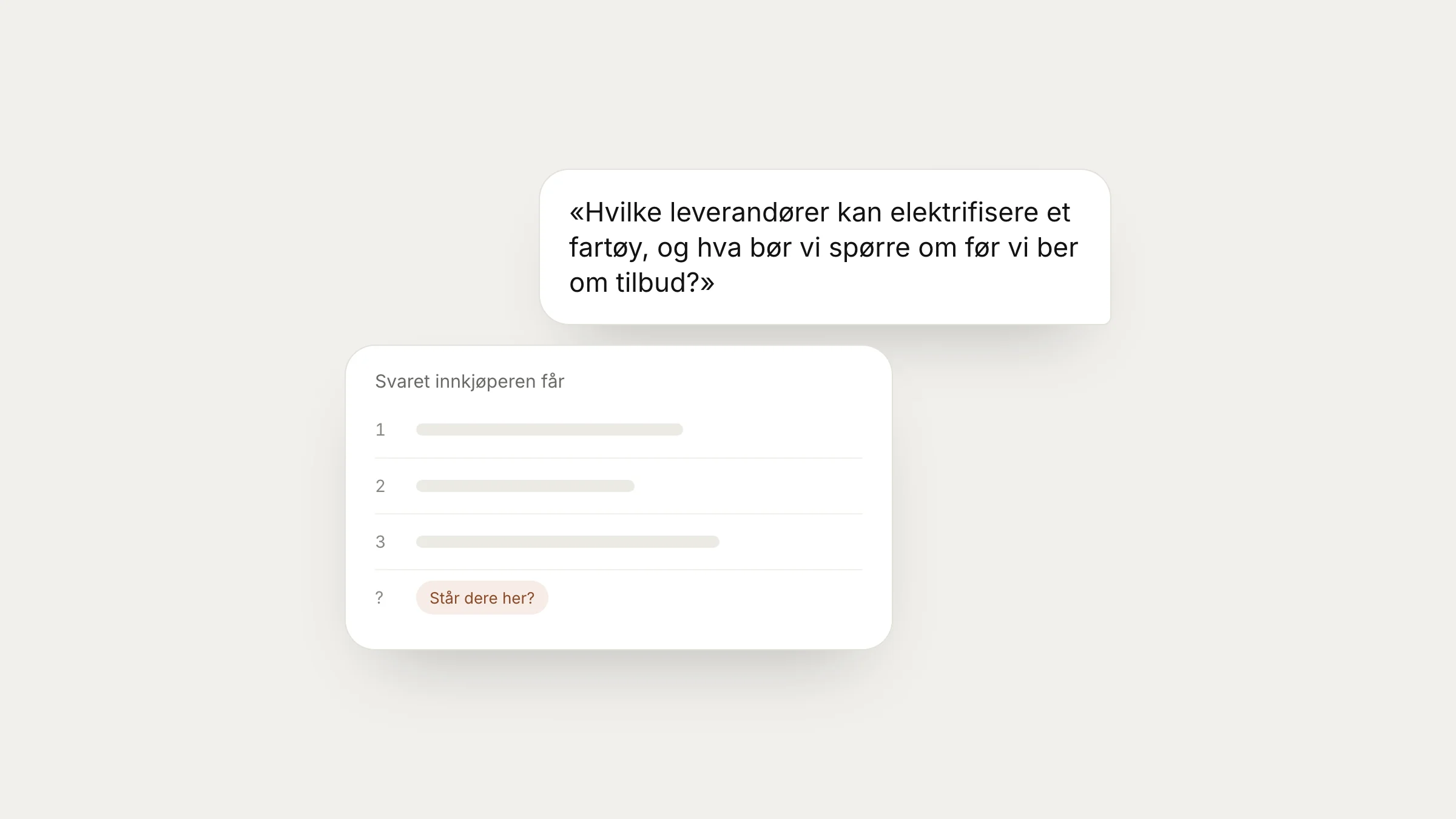
B2B companies with deep expertise should be chosen for what they can do, even when the buyer asks AI first. Here are the surveys, the numbers and where K—lab itself stands.
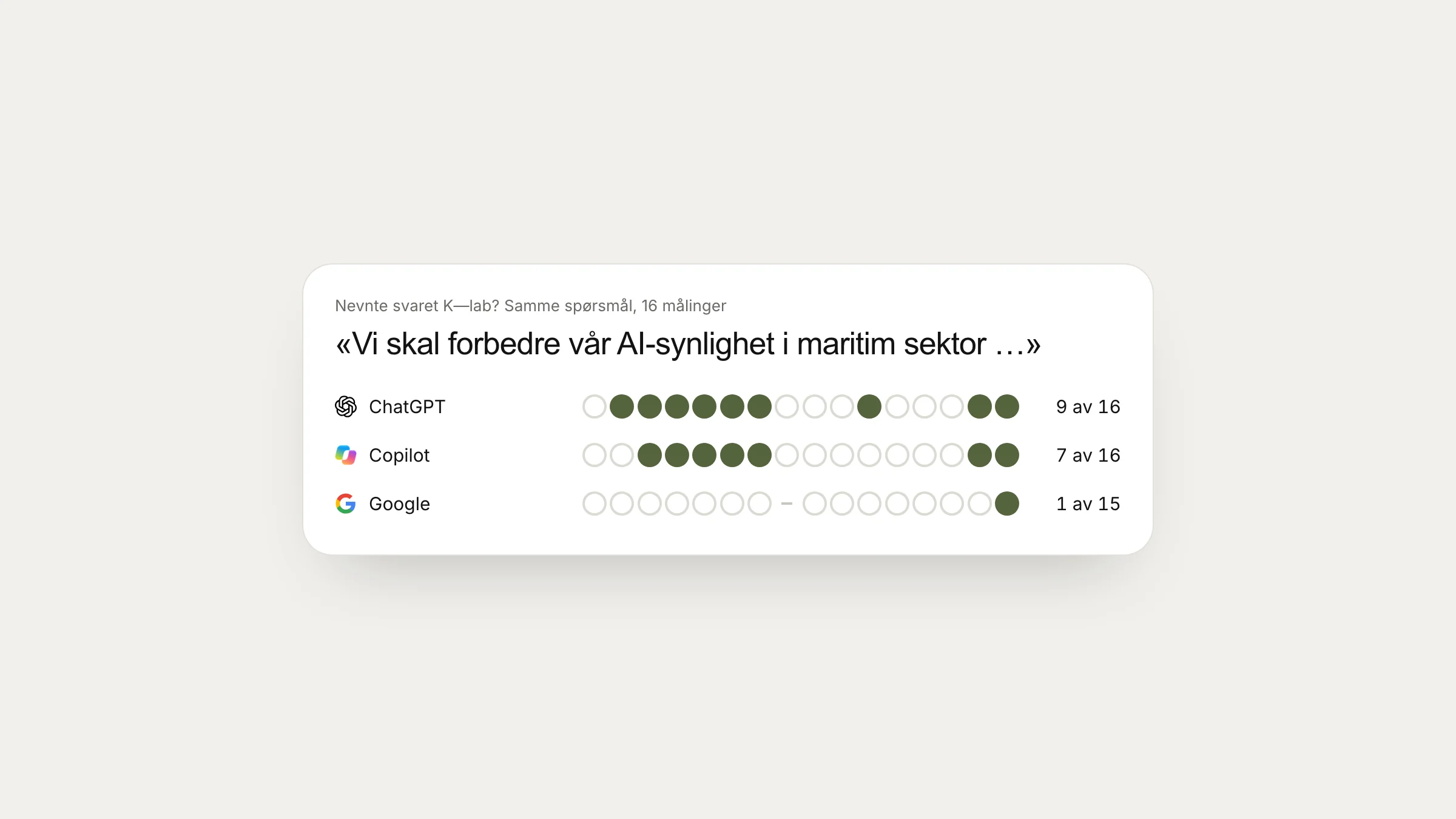
We asked ChatGPT and Copilot buyer questions every other day for a month. See how much the answers change, and why a single answer is only a snapshot.
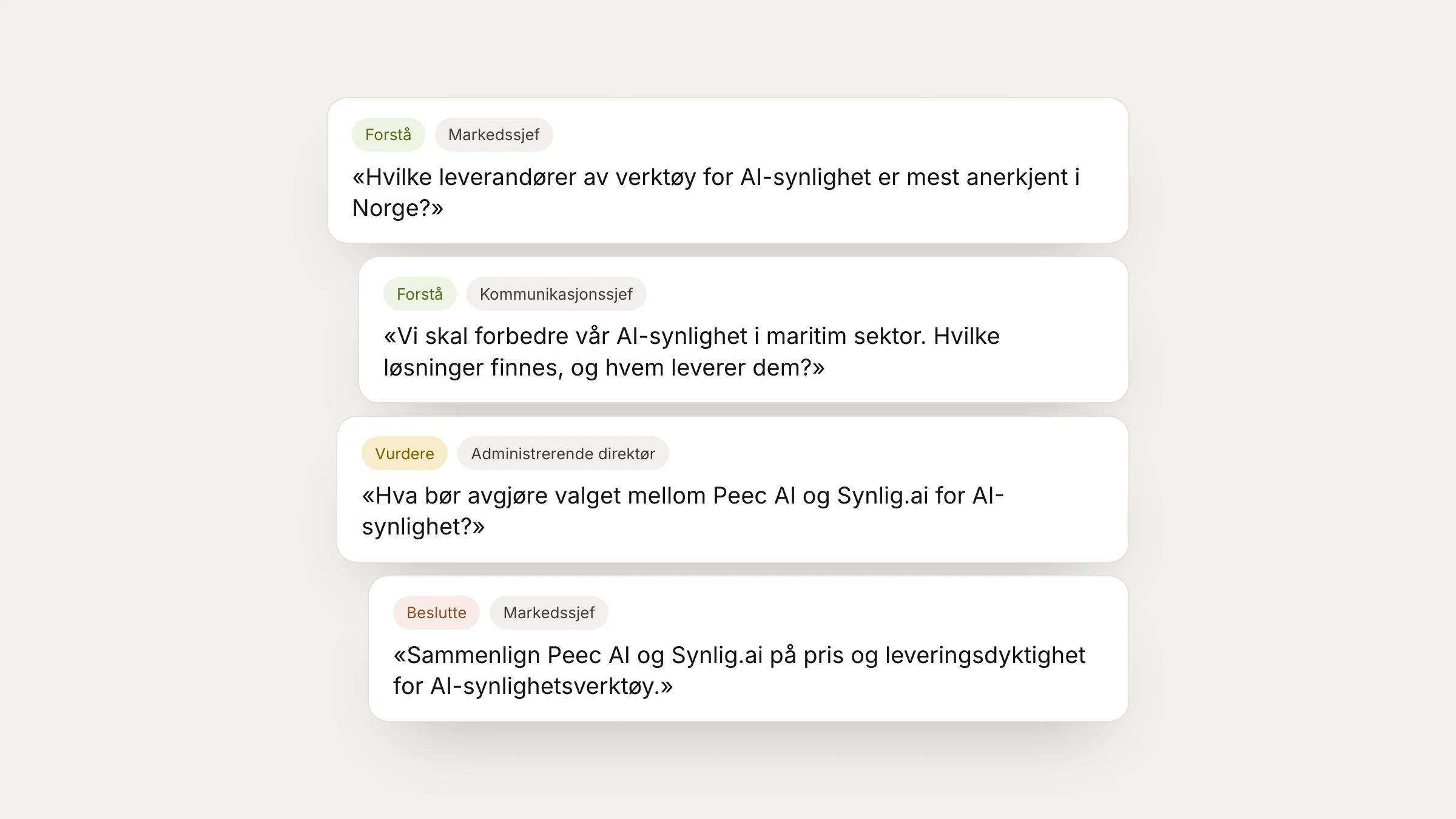
K—lab asks buyer questions written from buying situations in industry and the maritime sector. Here is how they are chosen, and how to build your own list.
Spend less time gathering and explaining results. Spend more time on the actions that actually deserve attention.