It is hard to know whether your AI visibility is good until you see it next to others.
Being mentioned in six out of ten answers can be strong. But if your closest competitor is recommended in nine of those same ten, the picture is different.
That is why AI visibility should always be measured against your competitors.
The most important thing is to measure yourselves and your competitors on the same basis.
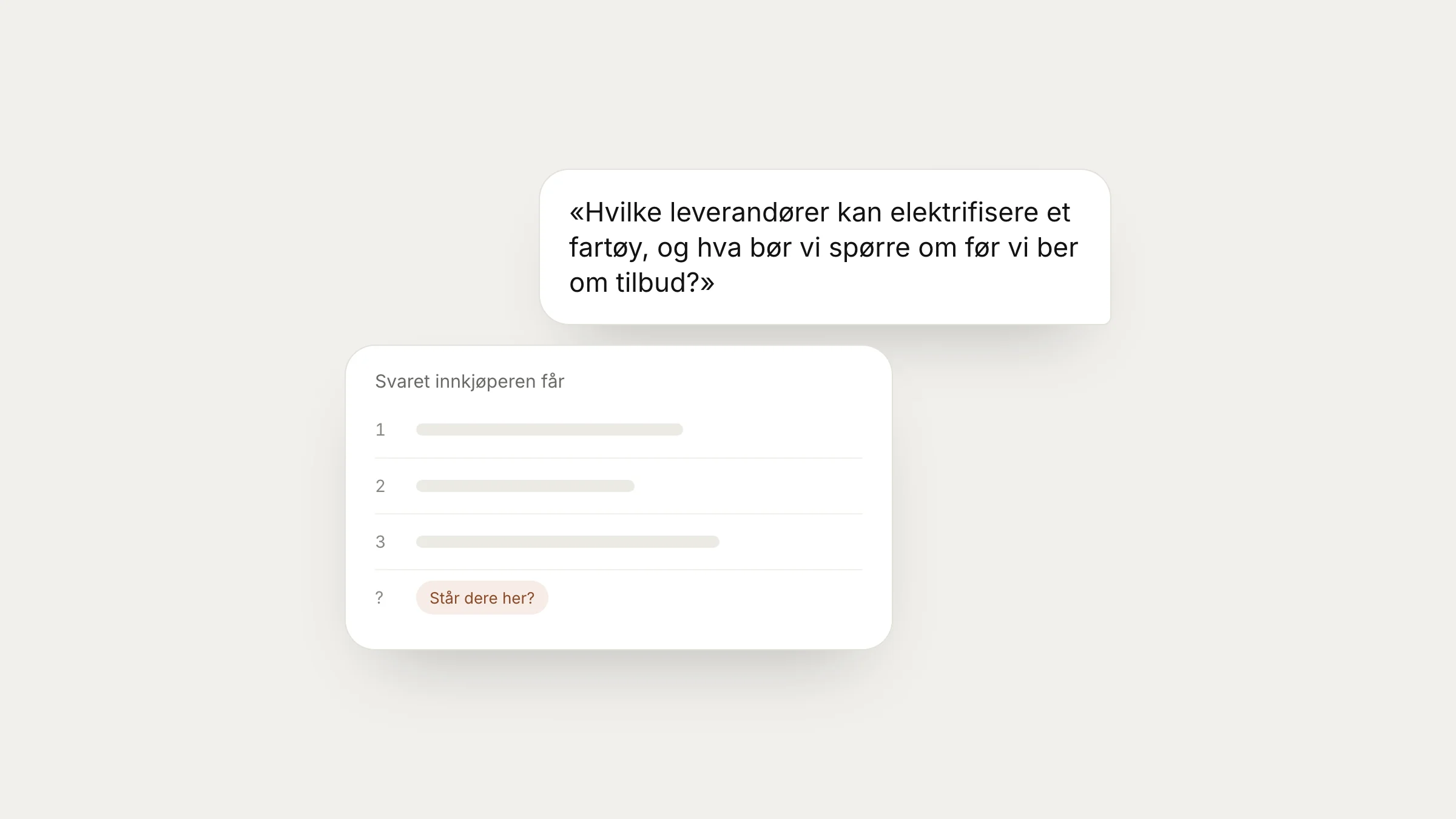
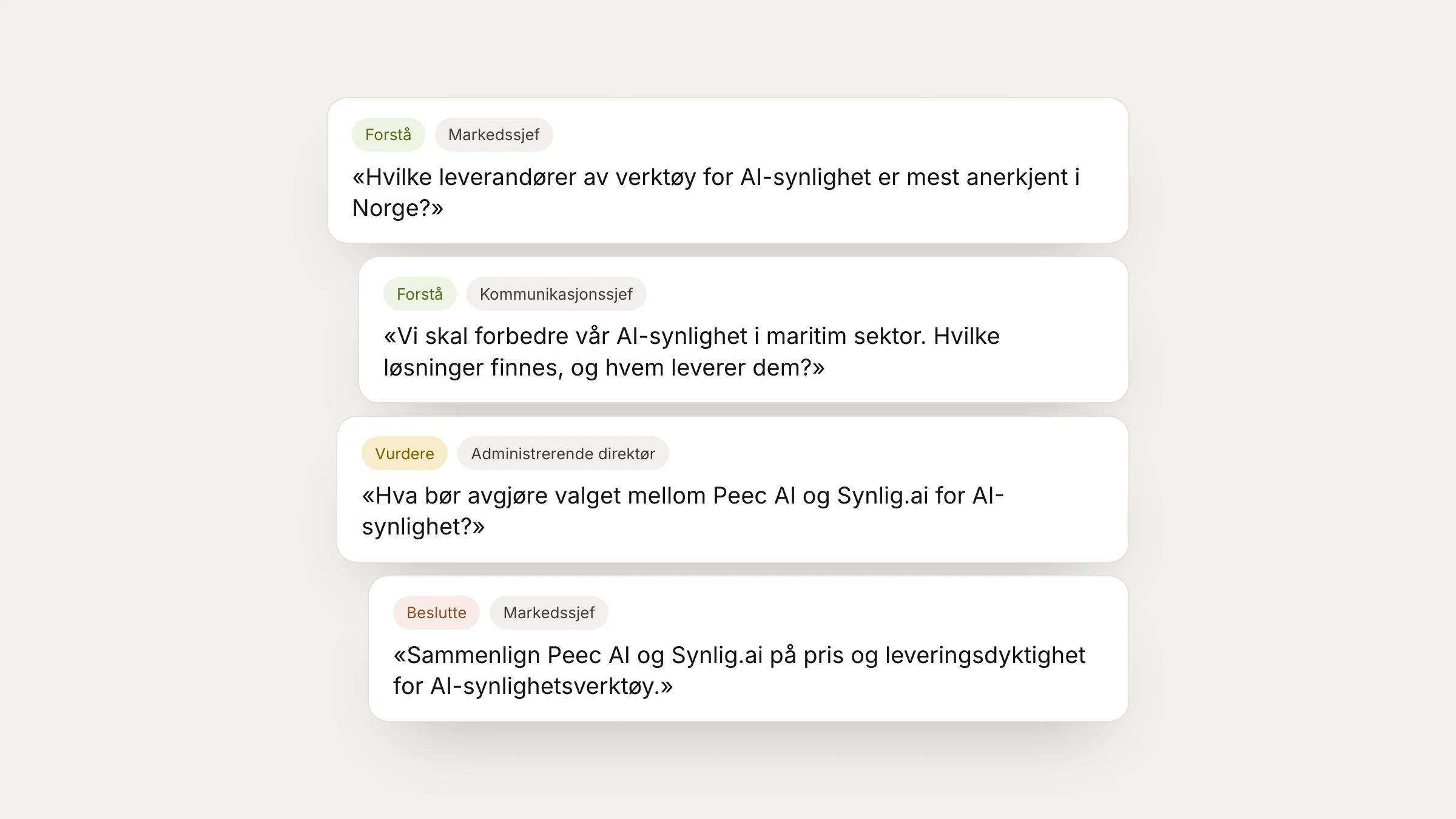
Start with questions that actually matter in the buyer's journey. They can be questions about needs, solutions, experience, markets or choice of supplier.
For example:
That way you see who actually comes up when the customer is researching something that matters, which tells you more than who is most visible in general.
Two companies can be mentioned equally often and still be in very different positions.
One may be mentioned as one option in a long list. The other may be recommended, with a clear reason why.
So look at:
The most useful findings often lie in the differences between these points.
If a competitor keeps coming out ahead of you, noting it is not enough.
Look at why.
Maybe they have more clear-cut case studies. Maybe they document experience from a particular market better. Maybe external media or partners back up their position.
Or maybe they simply explain their service in a way that makes it easier to understand when it is relevant.
Then you have something more concrete than “they are more visible.”
You have a gap you can work on.
Nor is it certain that one competitor is strongest at everything.
One may dominate early in the buyer's journey, when the customer is exploring different solutions. Another may come in stronger when the question is about documented experience or choosing a supplier.
That is why it helps to divide the questions into groups such as:
Research: Who becomes visible when the customer is trying to understand the need?
Comparison: Who is highlighted when different options are being weighed?
Decision: Who carries weight when the customer is looking for experience, documentation and reassurance?
Then the competitive picture becomes much clearer.
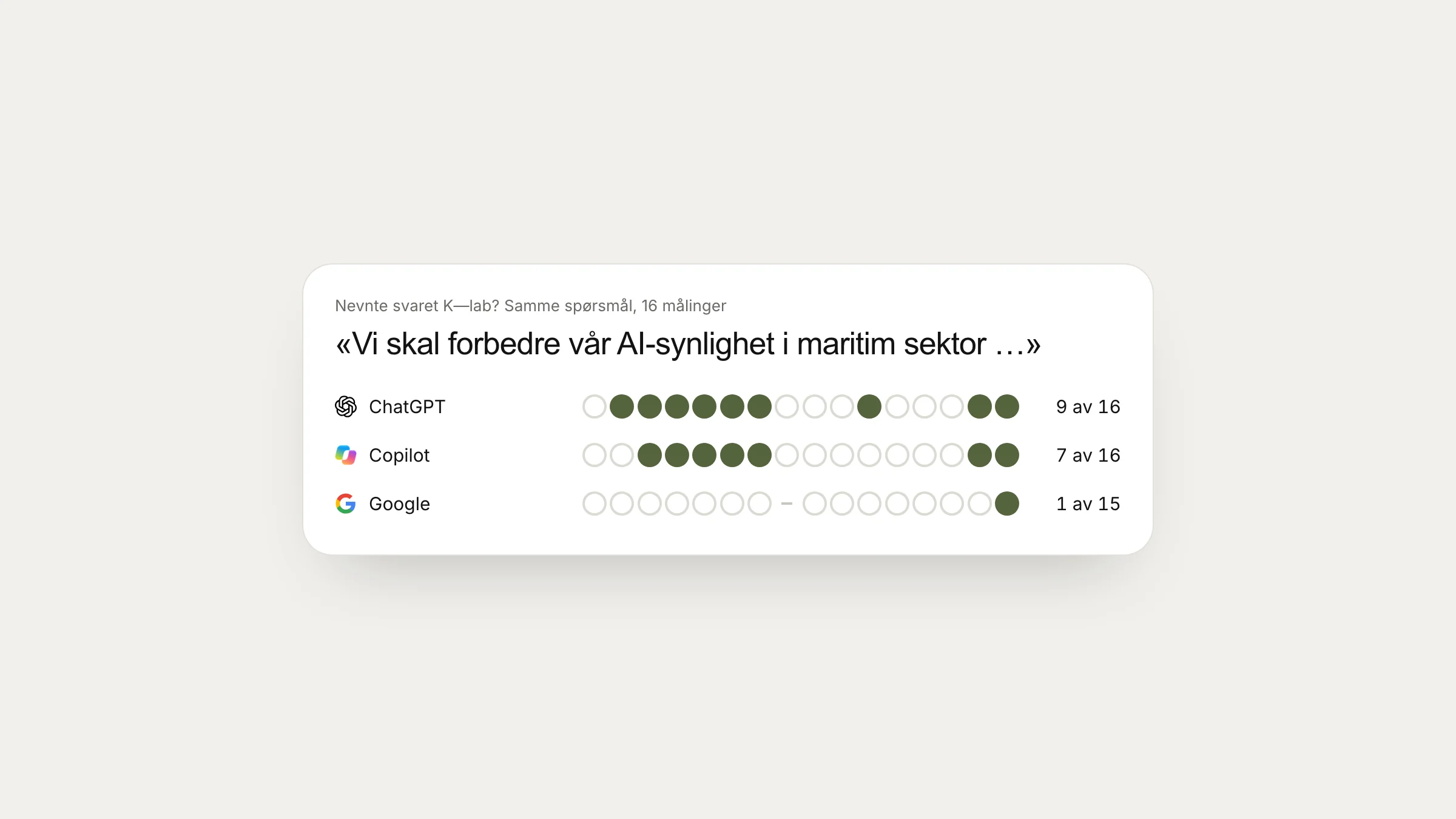
A single measurement can show who is ahead right now.
What is interesting is whether the gap changes.
If you improve important pages, document more projects or build stronger external sources, you should be able to measure the same questions again and see whether your position shifts.
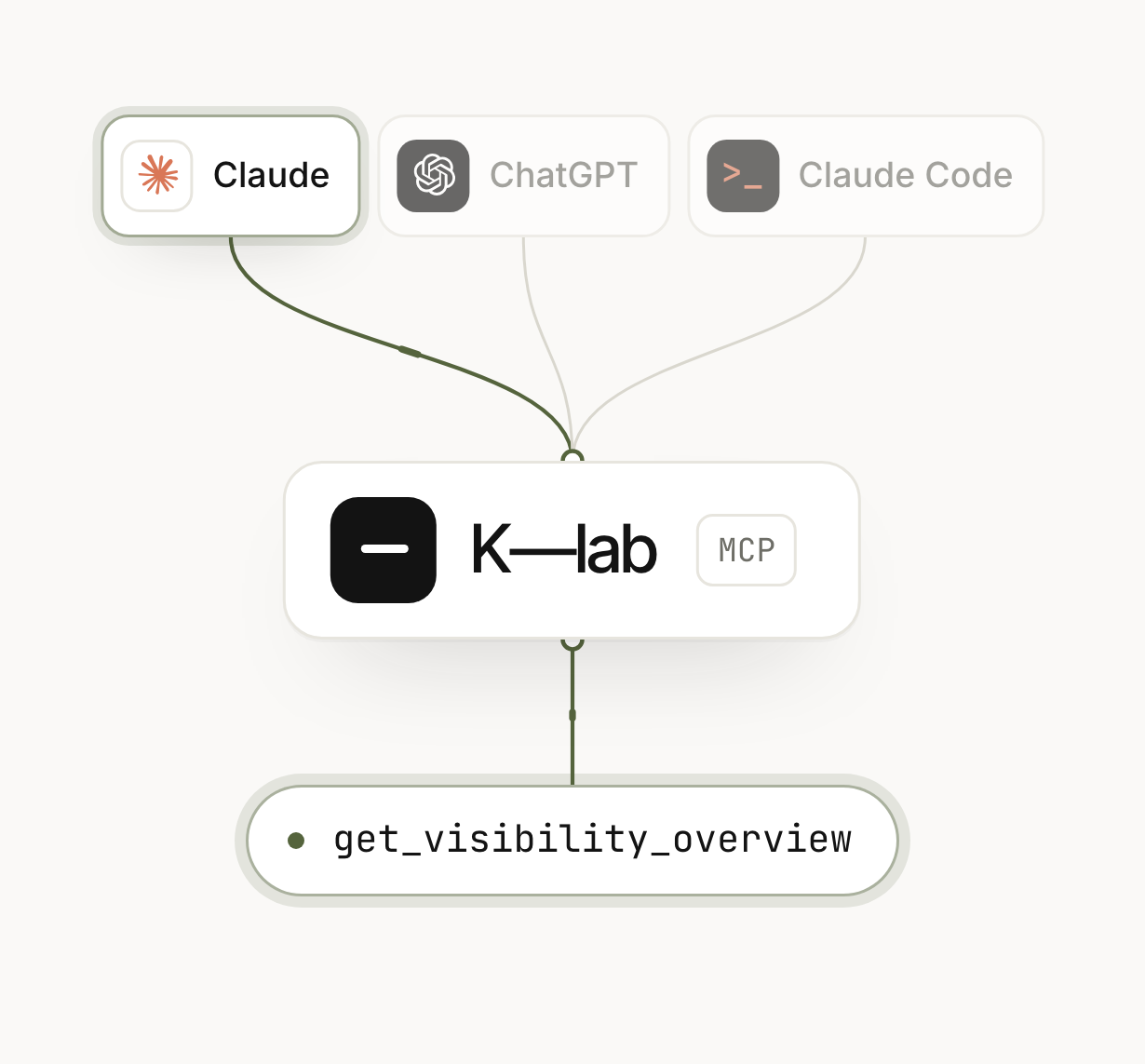
K—lab Cited is built to show exactly these kinds of differences: who is recommended, which questions competitors win on, what they are highlighted for and which sources support them.
The goal is not to copy your competitors.
The goal is to understand why the market and AI see them the way they do.
If you see a competitor pulling ahead in an area you want to own yourselves, you can assess what is actually missing. Better documentation? A clearer service page? More relevant case studies? Stronger external coverage?
That is when competitor measurement becomes useful.
Not because you know who “won.”
But because you see what you should do differently.
B2B companies with deep expertise should be chosen for what they can do, even when the buyer asks AI first. Here are the surveys, the numbers and where K—lab itself stands.
We asked ChatGPT and Copilot buyer questions every other day for a month. See how much the answers change, and why a single answer is only a snapshot.
K—lab asks buyer questions written from buying situations in industry and the maritime sector. Here is how they are chosen, and how to build your own list.
Spend less time gathering and explaining results. Spend more time on the actions that actually deserve attention.