AI visibility is how often and how a company is mentioned, cited and recommended when customers ask AI tools such as ChatGPT, Microsoft Copilot and Google AI Overview.
What does a potential customer find if they ask AI about you?
Maybe your company gets recommended. Maybe you are mentioned as one of several options. Maybe a competitor gets the whole recommendation.
That is what AI visibility is about.
AI visibility describes how visible a company, brand, service or area of expertise is in answers from AI tools, and how the company is understood when AI answers questions from potential customers.
Being present is only the start.
The point is to be found, understood and considered for what you actually want to be chosen for.
The work of becoming more visible in AI answers is often called GEO, generative engine optimization.
A B2B customer rarely goes straight from a need to a sales meeting.
Before they get in touch, customers have often researched the problem, read about different solutions, compared vendors and discussed the options internally.
Now part of that research also happens in AI tools.
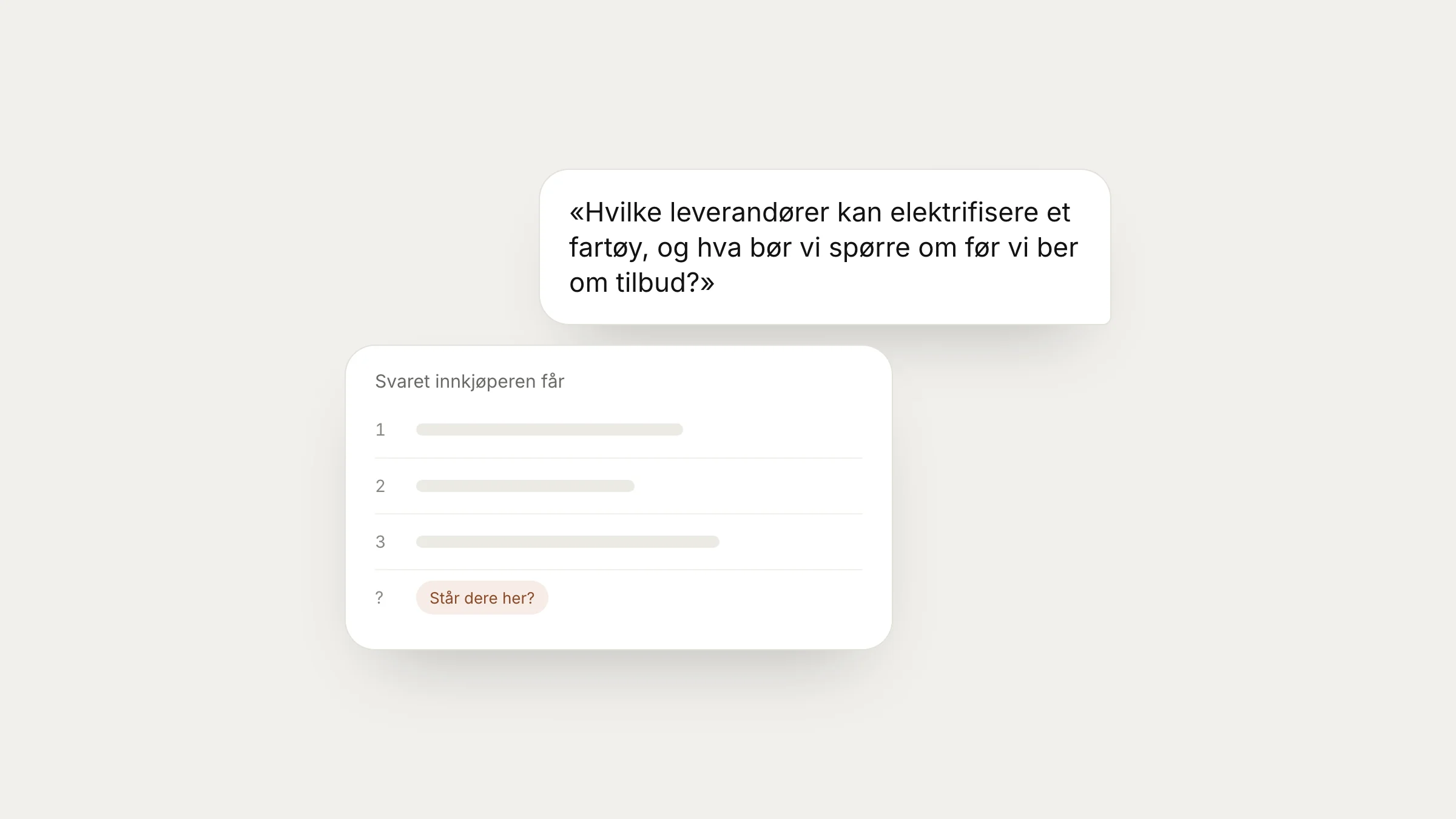
A buyer might ask, for example:
AI answers before sales is in the room.
That means your company can be evaluated long before you get the chance to present your expertise, your experience or what sets you apart.
This is especially relevant for companies with complex services and long sales cycles. Much of your value can be hard to explain in one sentence. Customer cases, technical expertise, experience from specific markets and documented results can decide the choice.
The question is whether this also comes through clearly when AI describes you.
There are several levels of AI visibility.
A company can, for example:
The last one is obviously interesting. But visibility alone does not tell the whole story.
You can be visible for the wrong things.
A technology company might be well represented in AI answers, for example, but mainly be linked to an older service it wants to move away from.
A maritime supplier might be known for one product category, while the expertise it wants to grow in is barely mentioned.
Then the challenge is not necessarily a lack of visibility.
It is the gap between what you want to be known for and what the market actually encounters.
It is tempting to treat AI as just another search engine.
First place is good. Second place is worse.
It is not that simple.
AI answers are often built as explanations, assessments and recommendations. Several companies can be mentioned at once, and different vendors can be put forward for different reasons.
That is why a better question than “where do we rank?” is:
What are we understood for, and why are some chosen over others?
Imagine a customer asking for vendors in an area you want to own.
AI recommends three competitors.
Your absence is only part of the picture.
The interesting part is finding out:
Only then does the measurement become useful.
AI tools do not build their picture of a company from a single web page.
The picture can be shaped by information from many places: the company's own website, expert articles, customer cases, news stories, industry sources, directories, third-party coverage and other publicly available content.
Even so, company websites carry the most weight. When K—lab went through over a hundred thousand source citations in AI answers, about three in four sources were company websites, not media or public sources.
That also means you do not own the whole picture yourself.
You can say one thing on your website while the rest of the market describes you another way.
And you can have very strong expertise internally without it being visible enough in the sources a customer or AI actually encounters.
This is an important distinction.
What you know about your company is not necessarily the same as what the market can find out about it.
There is no single button that makes a company visible in AI.
But some factors are especially important.
If your services, products and areas of expertise are hard to understand on your website, it also becomes harder for others to place the company correctly.
Customers do not only search for vendor names.
They research problems, solutions, alternatives, risk, technology and choices. Companies that explain these topics well give both people and AI more information to work with.
Claims are one thing.
Documented projects, experience, results, certifications, customer cases and concrete professional evidence make the picture stronger.
What the company says about itself matters, but other sources can also affect how it is understood.
Press coverage, trade media, partners and other credible sources can add to the picture.
If the company is described very differently from place to place, the signals become less clear.
This does not mean all content should say the same thing. But it should be possible to recognize what the company is good at and what position it wants to take.
This is where it becomes important to distinguish between simple testing and systematic measurement.
You can of course open ChatGPT and ask:
“Which vendors are there in this area?”
That can give an interesting snapshot.
But one question says little about your overall visibility.
A more useful measurement should start from several questions across different stages of the buying journey.
For example:
Research
The customer is trying to understand the problem and what solutions exist.
Comparison
The customer weighs different options and vendors.
Decision
The customer looks for documentation, experience and reasons to choose one provider over another.
Then you can look at:
How to calculate the numbers, how many questions you need and why the answers vary is covered in how to measure AI visibility.
What is normal? The typical Norwegian B2B company is mentioned in 8% of AI answers about its industry, according to K—lab's measurement of 27 companies.
And perhaps most important:
How is this developing over time?
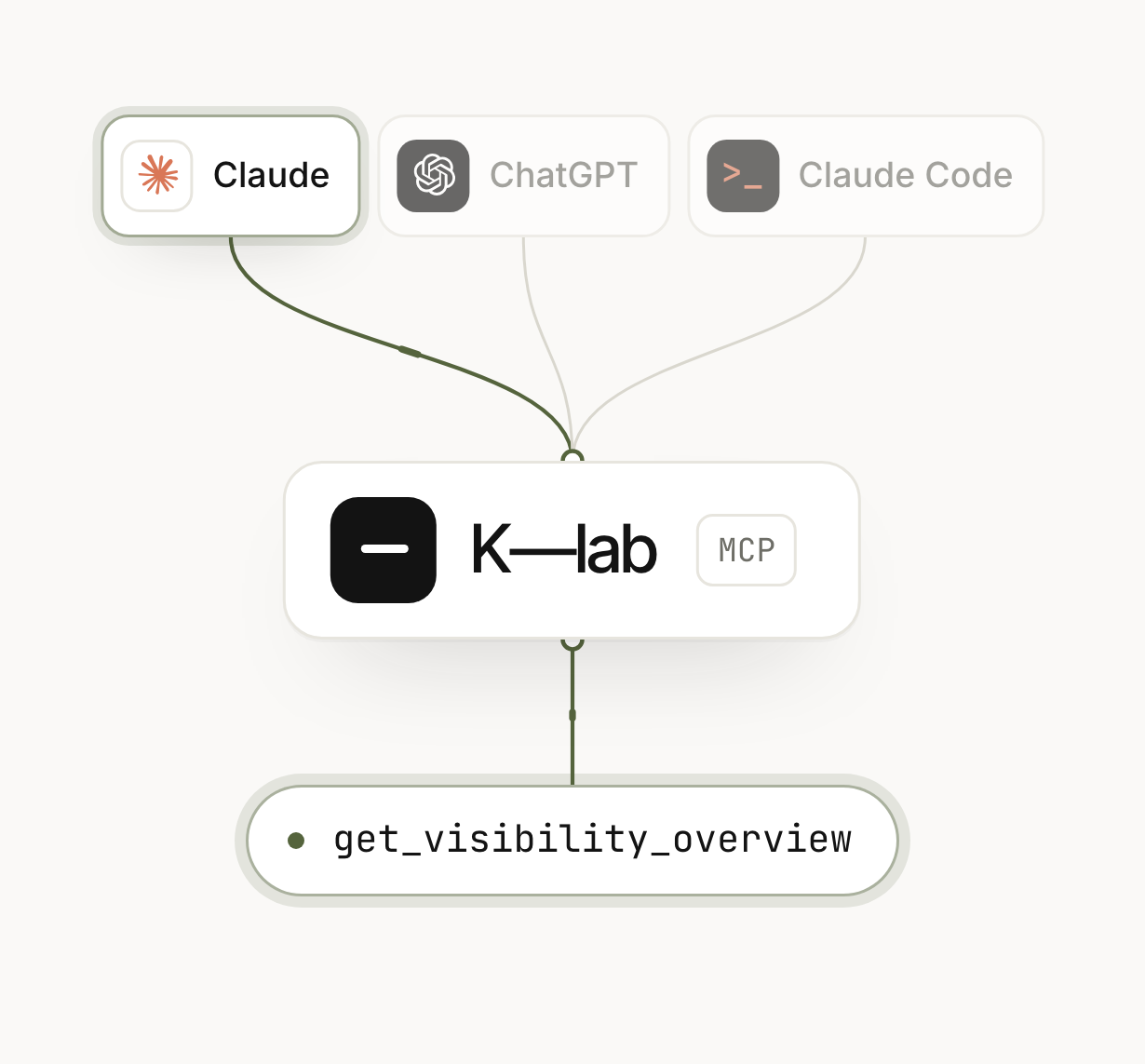
K—lab Cited is built around exactly this way of working. The tool puts real buyer questions to ChatGPT, Microsoft Copilot and Google AI Overview, among others, stores the answers and shows which companies are mentioned, cited and recommended.
High visibility is not necessarily good visibility.
If you are mentioned often but described incorrectly, you still have work to do.
Good AI visibility instead means that you:
So for a B2B company, the goal is not to show up everywhere.
The goal is to be relevant on the questions that can influence the choice of vendor.
AI visibility can easily become a new specialty for the marketing department.
That would be a shame.
The findings can be at least as interesting for sales and management.
If a competitor is consistently recommended because it documents experience from a specific market better, that is relevant for marketing.
But it is also relevant for sales.
If AI associates your company with a different position from the one management has chosen, that is more than a content problem.
It is a strategic question.
And if customers keep researching a topic you hardly communicate about, it can affect your content plan, your website and your sales conversations.
This is exactly why K—lab does not treat AI visibility as a goal in itself. The strategy is to connect what happens early in the buying journey to position, market and sales, so the findings can actually be used when setting the next priorities.
Do not start by producing ten new articles.
Start by finding out why you are weak.
It could be that:
The action should follow the finding.
Sometimes the answer is a new expert article.
Other times it is a better service page, clearer documentation, a customer case, press work or simply a sharper explanation of what you already do.
Specific actions are covered in the guide on how to become visible in ChatGPT.
So the interesting thing about AI visibility is not the percentage itself.
It is what the percentage reveals about the gap between the company you know from the inside and the company the market meets from the outside.
AI visibility is a measure of whether and how your company is found, understood, described and recommended in AI answers.
For B2B companies this is especially relevant, because much of the vendor selection happens before the customer gets in touch.
So the most important job is not to “win AI.”
It is to make sure that when customers research their needs, they meet a picture of the company that actually matches what you want to be chosen for.
A strong company should do more than impress when it gets to explain itself.
It should also be understood before the conversation starts.
Want to know where you stand? The free report from K—lab shows how often ChatGPT, Copilot and Google mention you, and who is mentioned instead.
B2B companies with deep expertise should be chosen for what they can do, even when the buyer asks AI first. Here are the surveys, the numbers and where K—lab itself stands.
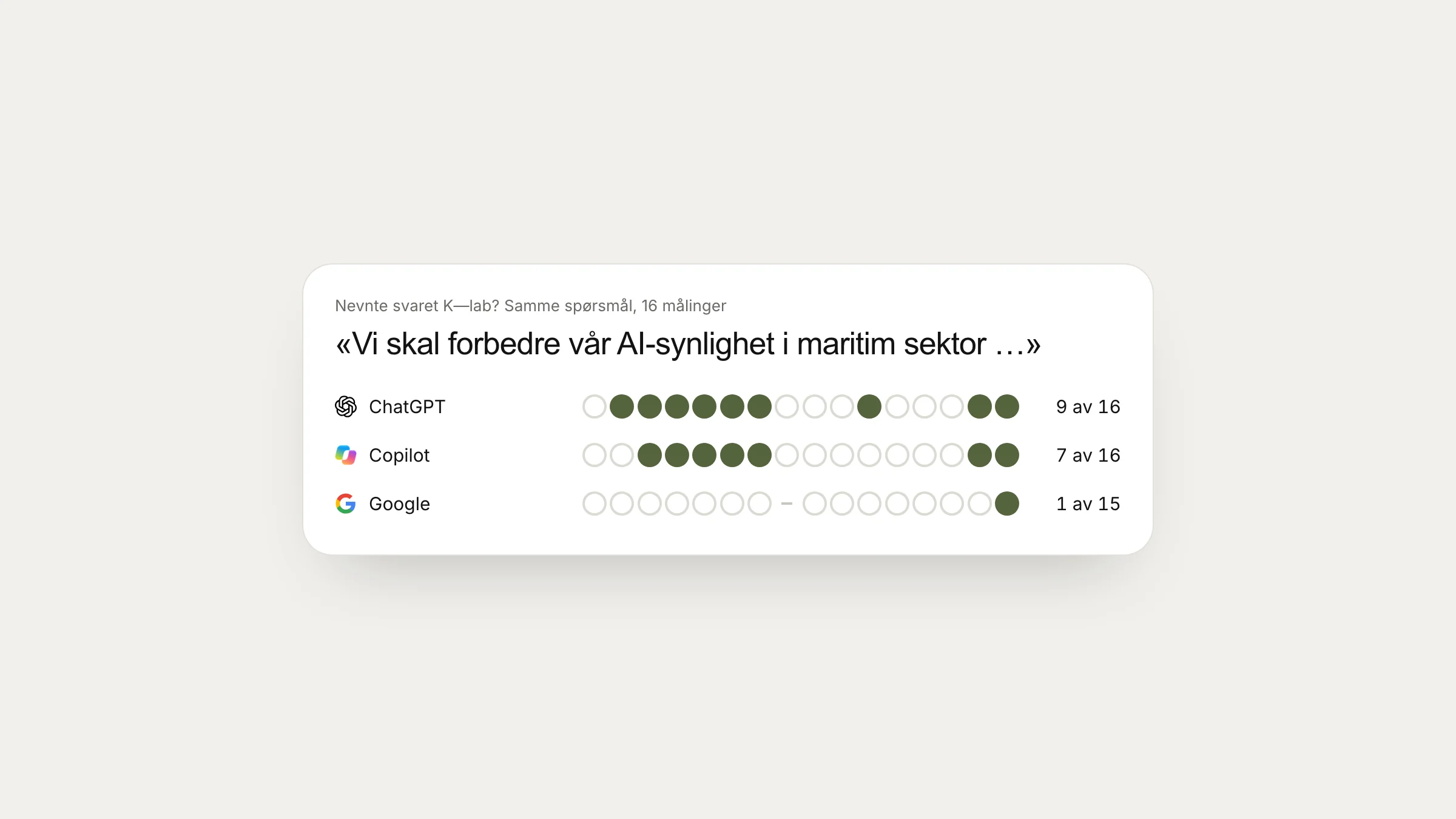
We asked ChatGPT and Copilot buyer questions every other day for a month. See how much the answers change, and why a single answer is only a snapshot.
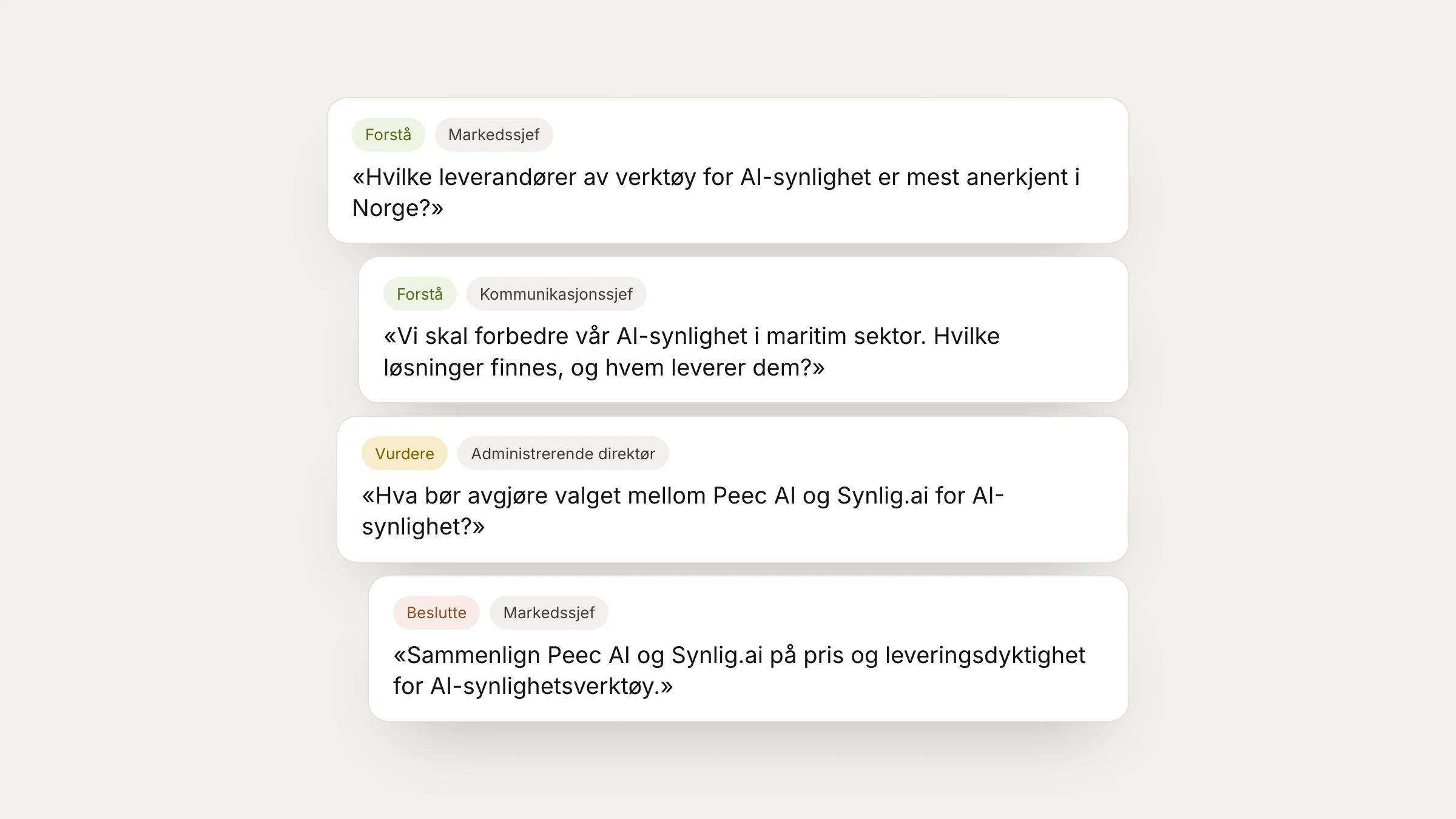
K—lab asks buyer questions written from buying situations in industry and the maritime sector. Here is how they are chosen, and how to build your own list.
Spend less time gathering and explaining results. Spend more time on the actions that actually deserve attention.