To get visible in ChatGPT, your web pages need to show up when ChatGPT searches the web, and they need to answer clearly what the buyer is asking. ChatGPT has no secret list of good suppliers. When a question calls for up-to-date information, it searches the web, reads the pages it finds and cites the ones that answer best.
So the foundation is good, old-fashioned search engine optimization, and Google says the same in its guide to generative AI features. The difference is that you do not see the result in a ranking. It shows up in the answers, and the answers have to be measured. The work is often called GEO.
And the work is needed. In K—lab's measurement of 27 Norwegian B2B companies, the typical company was mentioned in 8% of AI answers to buyer questions about its industry.
A question like “which suppliers of hydraulic filters are there in Norway?” often turns into several searches. ChatGPT uses different words than the customer and builds the answer from the pages it finds.
Whether you make it in comes down to three things:
OpenAI has two crawlers: GPTBot collects data to train the models, while OAI-SearchBot fetches pages for ChatGPT search. If you block OAI-SearchBot in robots.txt, your pages cannot appear in ChatGPT search, according to OpenAI's documentation.
Sounds obvious? Of the largest Norwegian websites we examined, about one in six block OAI-SearchBot. The report on AI crawlers shows how you can opt out of training without disappearing from search.
ChatGPT cites pages that answer what the customer is asking, and that is rarely the homepage. It is service pages, product pages and expert articles on a single topic.
Start with your sales meetings: which questions do your salespeople get again and again? “Who supplies this in Norway?” “What does it cost?” “What is the difference between A and B?” “Who has offshore experience?” Every important question deserves a page that answers it.
The page has to use the same words as the search. Put the phrase in the page title, the URL, the main heading and the first sentence. A page about hydraulic filters for ships should be called exactly that, not “Our solutions.”
Text that answers directly is the easiest to cite. Give the answer first, in two or three sentences, and expand afterward. Use numbers, names and facts instead of general claims. “Delivery within 48 hours anywhere in Western Norway” is easier to cite than “fast delivery.”
Link to the sources you rely on, and keep the text tight.
Others saying you are good carries more weight than you saying it yourselves. In our review of over a hundred thousand source citations, LinkedIn was the most used of the sources that recur across industries.
In practice, that means:
When a buyer asks AI whether a supplier can be trusted, or how it compares with others, reviews and comparisons are what the answer can draw on. Ask satisfied customers for a review, and create a fair page comparing you with the alternatives, as we have done at k-lab.so/en/sammenlign. Lists where you crown yourselves the best inspire little trust.
Pages that are not indexed cannot be cited. Register your website in Google Search Console and Bing Webmaster Tools, submit your sitemap and check that your most important pages are actually indexed.
Google AI Overview also makes room for more sources than ChatGPT. In our measurement, Google pulled in 8.1 sources per answer, compared with 3.9 for ChatGPT. In other words, more spots to compete for.
Ask the same buyer questions regularly, and track whether you are mentioned, who is mentioned instead and which sources the answers draw on. ChatGPT's answers vary from one time to the next. What counts is the trend across many questions and several months.
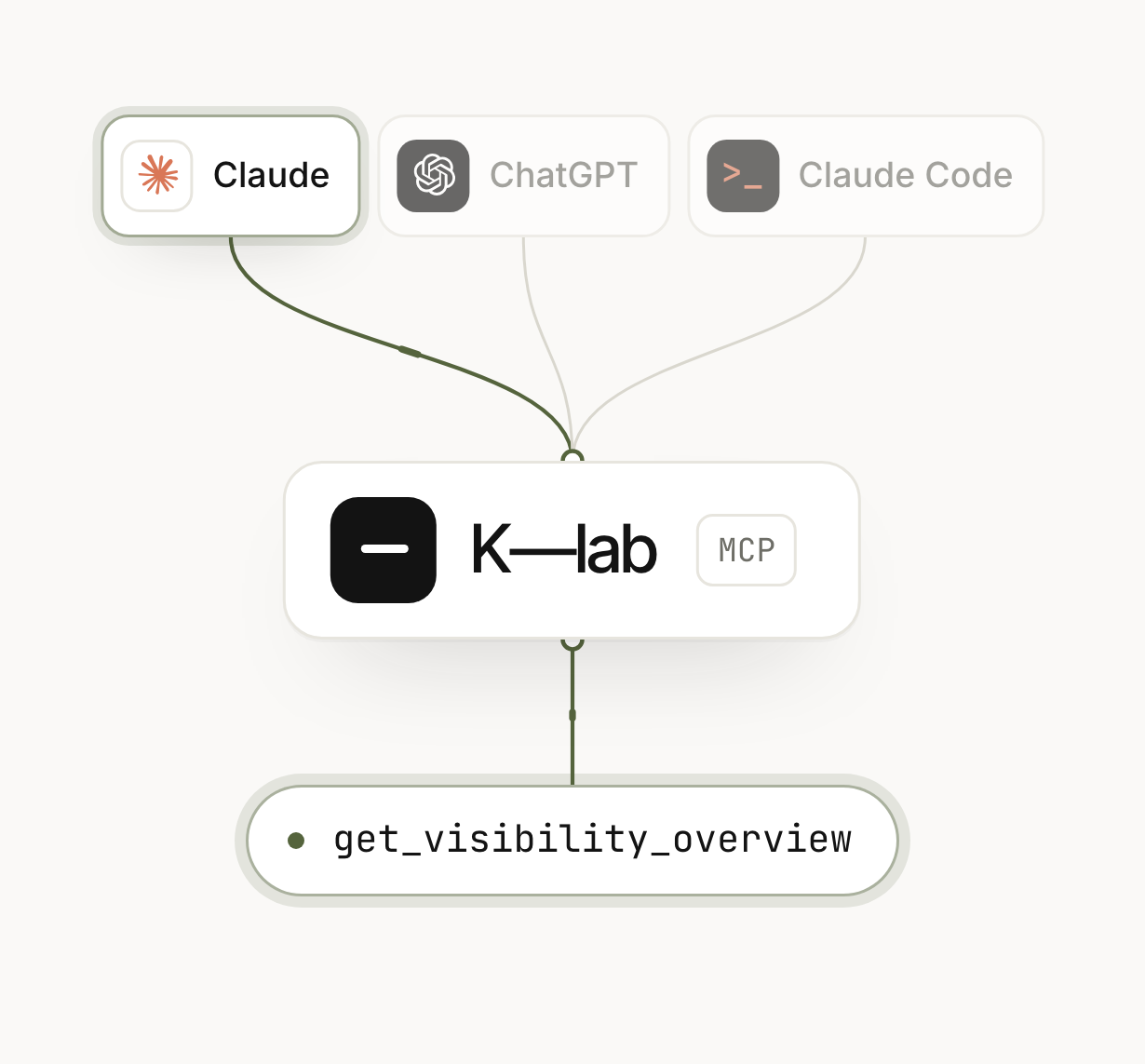
The free tools give you part of the picture. Search Console shows how often your pages appear in Google's AI features, Bing Webmaster Tools shows which searches Copilot has cited you for, and Google Analytics has added a dedicated channel for traffic from AI assistants. But they only show your own pages. Who is mentioned instead of you, and what the answer actually says, you can only see by asking the questions yourself. That is what K—lab Cited does, in ChatGPT, Copilot and Google AI Overview.
Plenty of shortcuts to AI visibility are on sale. Dedicated AI files like llms.txt, special markup and text chopped into small chunks for machines are among them. Google writes that none of these are needed to appear in its AI features.
Paid press releases and fake reviews? Google also writes that chasing inauthentic mentions helps less than you might think. On top of that, it can damage trust in your brand.
What works is less exciting and far more useful: knowing where you stand, and doing the right work in the right order. Which buyer questions are you missing from? Who is mentioned instead? Which sources do the answers draw on? The answers determine what to do first.
That is what K—lab measures.
To get visible in ChatGPT, you need to let OAI-SearchBot in, have pages that answer buyers' questions in their words, give the answer early, get mentioned in the sources AI uses and track progress over time. The order matters. Start where the measurement shows you are missing the most.
Want to know where you stand today? The free report from K—lab shows how often ChatGPT, Copilot and Google mention you, and who is mentioned instead.
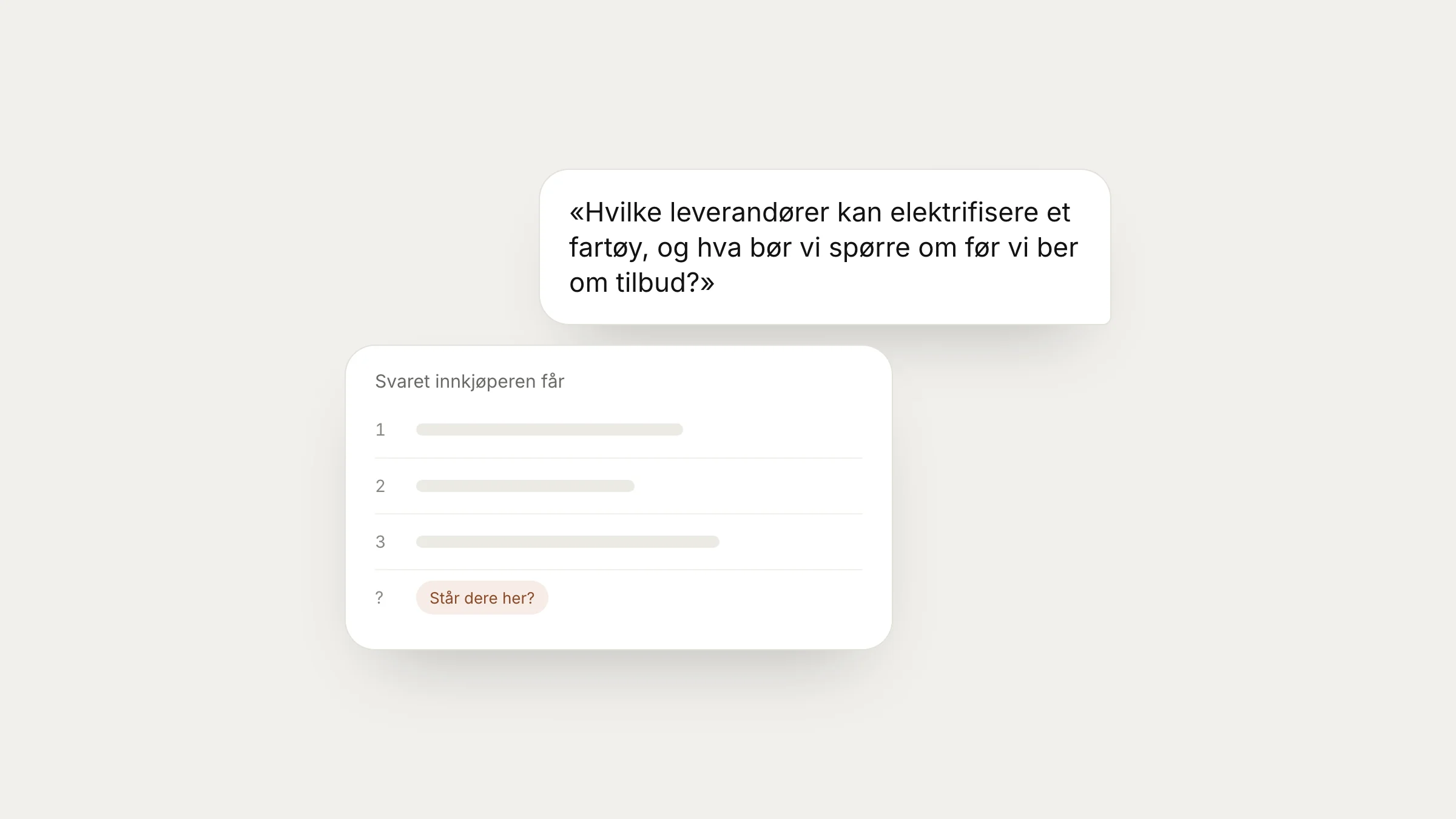
B2B companies with deep expertise should be chosen for what they can do, even when the buyer asks AI first. Here are the surveys, the numbers and where K—lab itself stands.
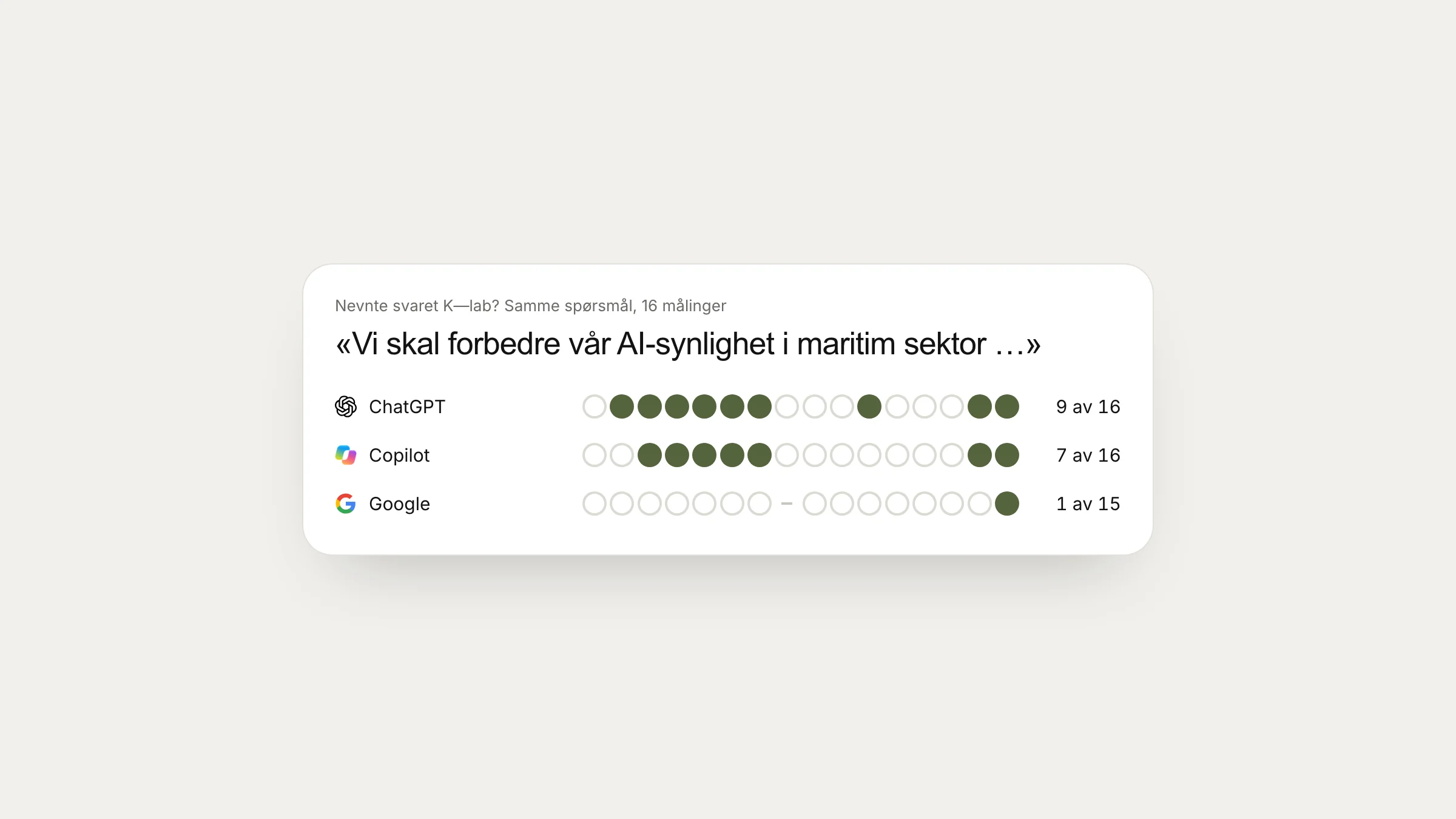
We asked ChatGPT and Copilot buyer questions every other day for a month. See how much the answers change, and why a single answer is only a snapshot.
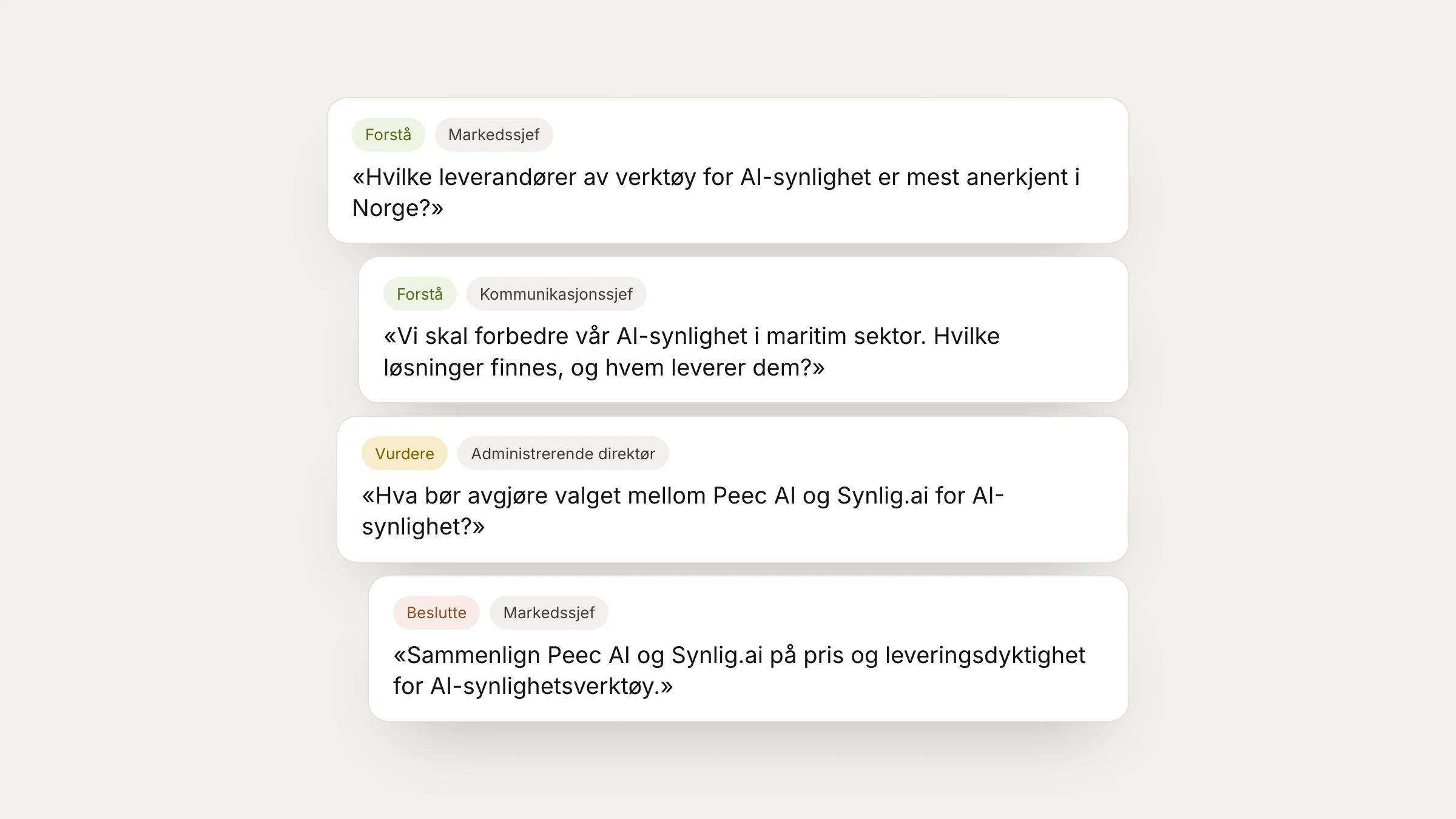
K—lab asks buyer questions written from buying situations in industry and the maritime sector. Here is how they are chosen, and how to build your own list.
Spend less time gathering and explaining results. Spend more time on the actions that actually deserve attention.