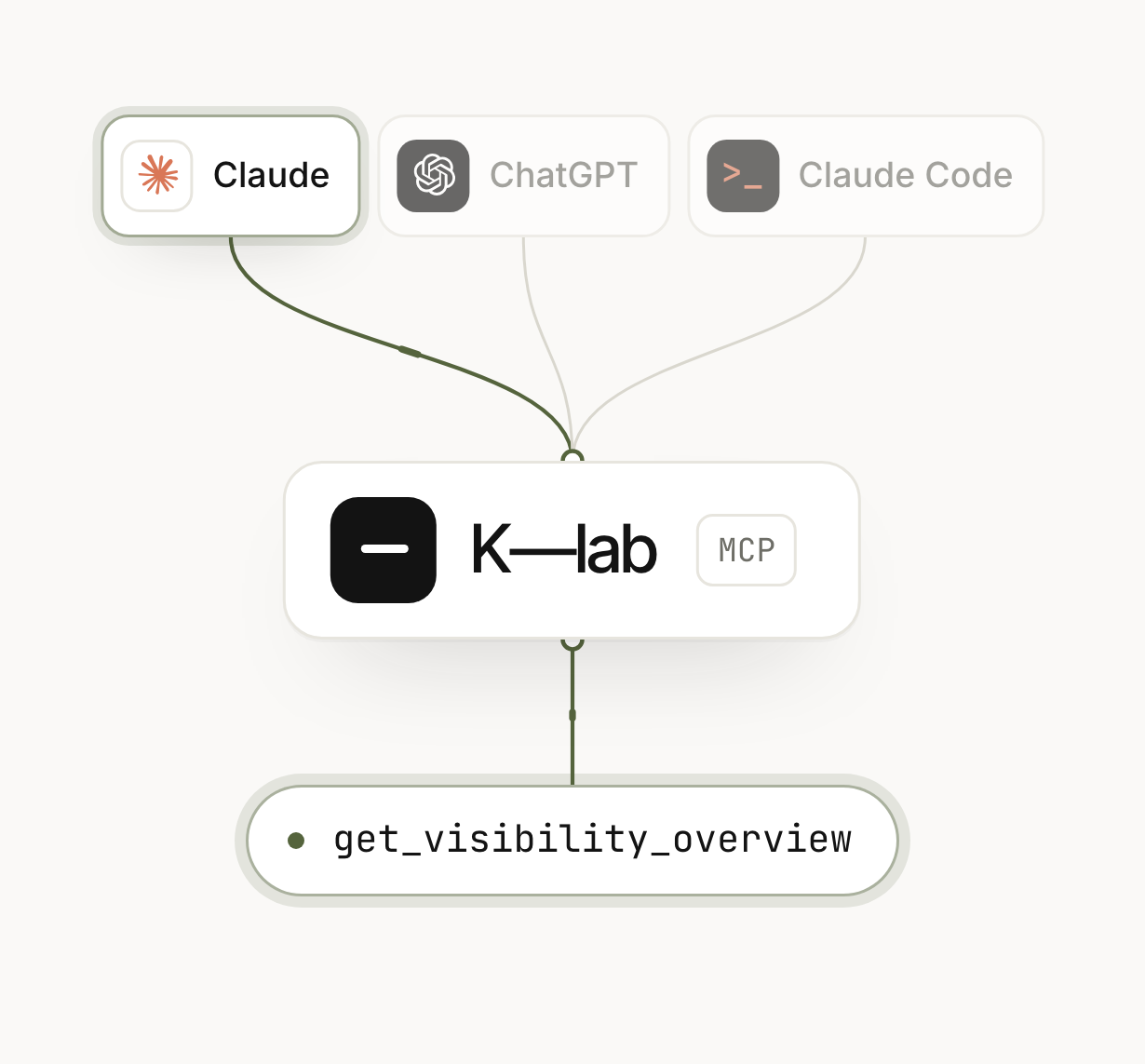
GEO, or generative engine optimization, is the work of getting mentioned, cited and recommended in answers from AI tools like ChatGPT, Google AI Overview and Copilot. Traditional SEO is about ranking high in a list of links. GEO is about becoming part of the answer itself.
The term first appeared in a 2023 research paper on how content can be used more in AI-generated answers. Since then it has picked up many names: GEO, AEO (answer engine optimization), AI SEO and LLM SEO. In Norway, many people call it AI visibility.
The short answer: the foundation is the same, but the result looks completely different. AI tools search the web before they answer, and they use pages that are indexed, relevant and clear. In its guide to generative AI features, Google writes that good search engine optimization is also what counts for AI search.
The difference lies in how the answer is put together, and in how you measure it:
Picture a buyer at a shipping company who needs a new ballast water treatment system. Before she calls anyone, she asks ChatGPT. If you are not among the names in the answer, you are out before sales is even in the room.
And the starting point is weak. In K—lab's measurement of 27 Norwegian companies, the typical company was mentioned in 8% of AI answers to buyer questions about its industry. When buyers ask in English about maritime suppliers, only 6% of the sources in the answers are Norwegian, according to the report on the maritime industry.
Most of it is good, old-fashioned craft, done with AI search in mind:
We go through each step in the guide on how to get visible in ChatGPT.
Rankings make little sense when the answer is a block of text. What you should track is
Google Search Console has added a dedicated report for generative AI, and Google Analytics now separates out traffic from AI assistants. Both show how your own pages perform. Who is mentioned instead of you, and what the answer actually says, you can only see by asking the buyer questions yourself, many times and over time. That is what K—lab does, in ChatGPT, Copilot and Google AI Overview.
Plenty of shortcuts are being sold right now. Dedicated AI files like llms.txt, special markup and text chopped into small chunks for machines are not needed to appear in Google's AI features, according to Google. Paid-for mentions and text written for machines are not a shortcut either.
What works is knowing where you stand and doing the right work in the right order. Which buyer questions are you missing from, who takes your place, and which sources do the answers draw on? That determines what to do first.
So, what is GEO? It is search engine optimization for a time when customers get a finished answer instead of a list of links. The goal is to be mentioned and recommended when buyers ask AI about what you offer. The foundation is the same as before: clear pages, good answers and mentions from others. What is new is that you have to measure the answers to know whether the work is paying off.
Want to know where you stand? The free report from K—lab shows how often ChatGPT, Copilot and Google mention you, and who is mentioned instead.
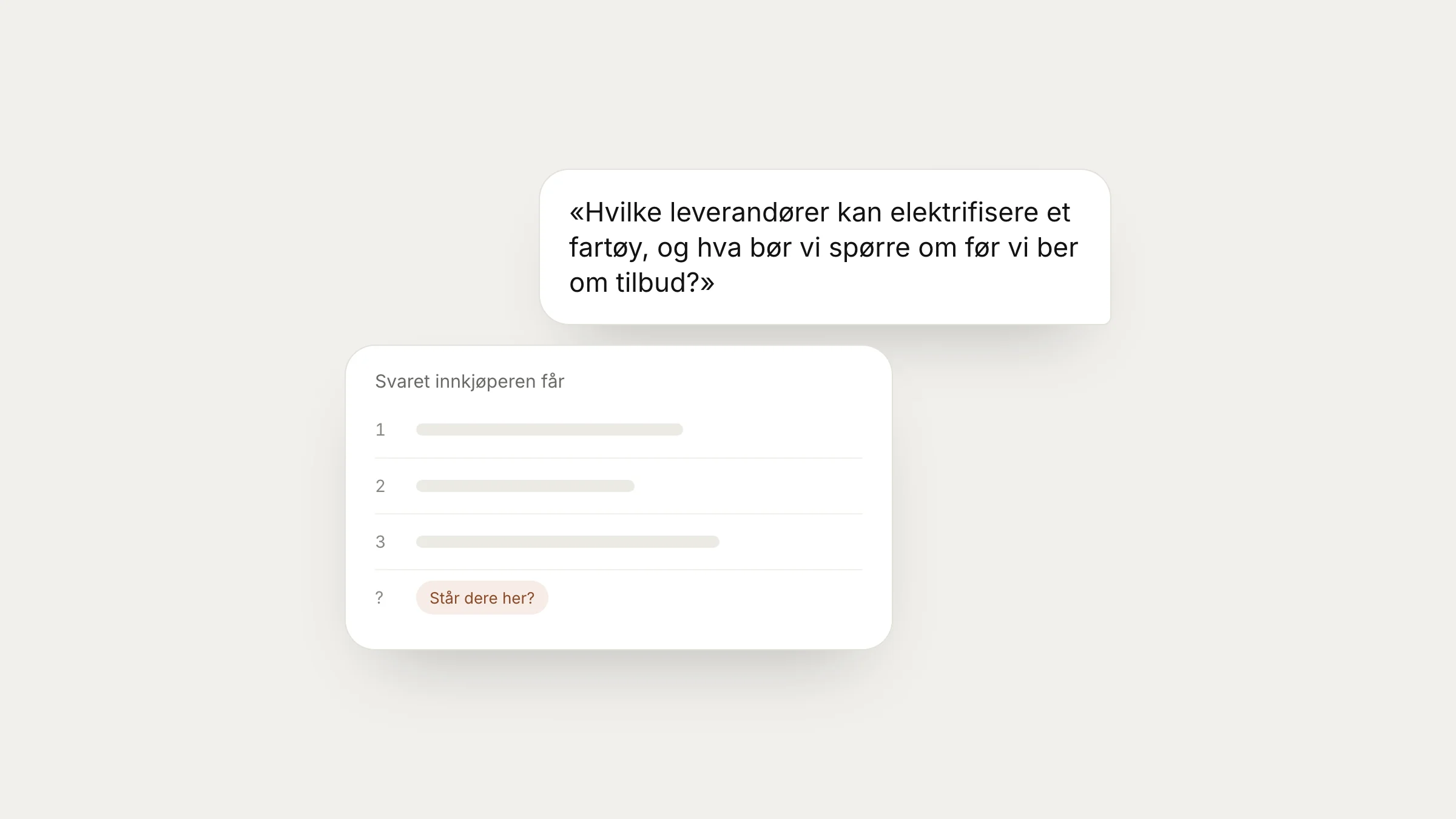
B2B companies with deep expertise should be chosen for what they can do, even when the buyer asks AI first. Here are the surveys, the numbers and where K—lab itself stands.
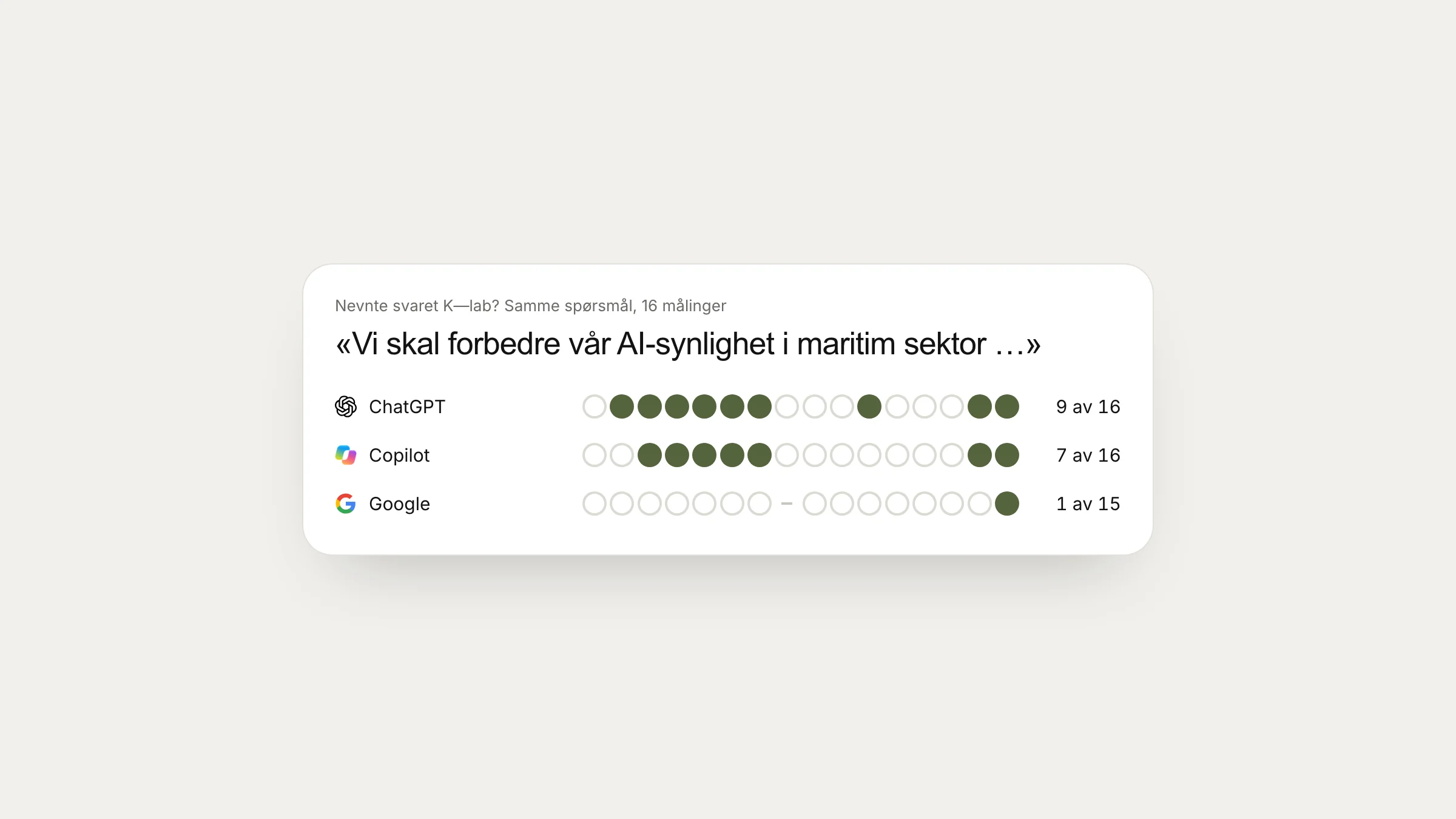
We asked ChatGPT and Copilot buyer questions every other day for a month. See how much the answers change, and why a single answer is only a snapshot.
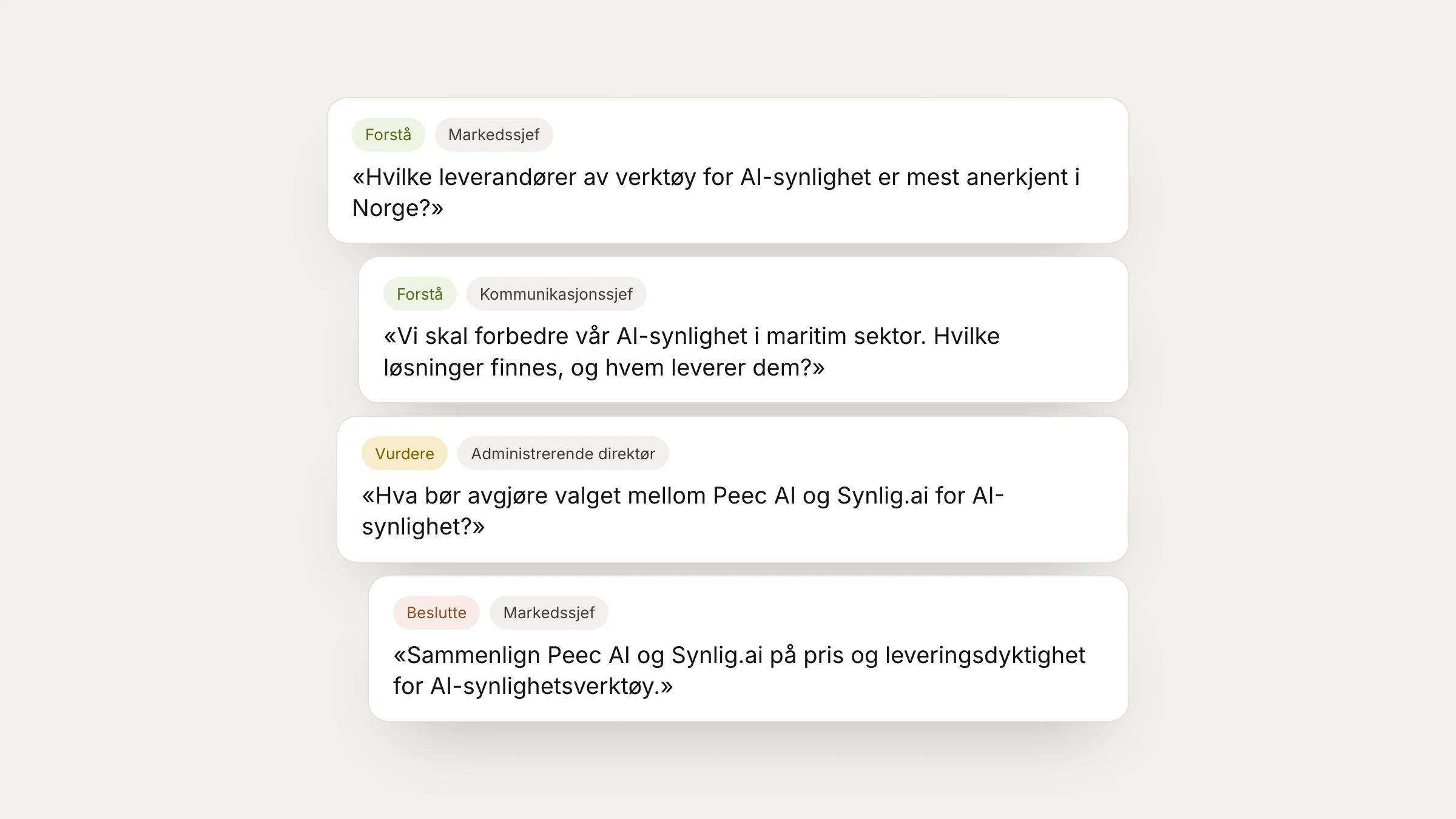
K—lab asks buyer questions written from buying situations in industry and the maritime sector. Here is how they are chosen, and how to build your own list.
Spend less time gathering and explaining results. Spend more time on the actions that actually deserve attention.