Share of voice in AI is the share of mentions in AI answers that go to you, compared with your competitors. If you ask ChatGPT, Copilot and Google the same buyer questions and count which companies are mentioned, your share of all the mentions is your share of voice.
The number is more useful than counting your own mentions alone. If you are mentioned often but a competitor is mentioned far more often, the picture looks different.
The math is simple. The choices around it are what matter.
The result is the share of the mentions that are yours. If you would rather know what share of the answers mention you, that is a slightly different number, often called mention rate. Both are useful. Decide which one you track, and stick with it.
There is no single right answer, because the number depends on who you include in your competitor list. For reference: in our measurement of Norwegian B2B companies, the typical company was mentioned in about one in twelve answers about its industry. A few companies were mentioned much more often and pulled the average up.
So compare yourself with your closest competitors, not with an average. The question is whether you are ahead of or behind the companies the buyer is actually considering.
Also remember to include competitors you don't think of as competitors. AI often mentions directories, consultants and foreign suppliers in the same answer. They take up space that could have been yours, even if they never show up in the sales process.
Because the platforms answer differently. Google AI Overview mentioned the company twice as often as ChatGPT and Copilot, according to the report on the platforms. A combined number can hide that you are strong in Google and absent in ChatGPT.
The answers also vary from one time to the next. A single answer tells you little. Measure many questions over several days, and look at the trend over months.
Questions from the buyer journey. Splitting them into groups gives a sharper picture:
One competitor may dominate early and another late. We walk through the setup in the article on comparing AI visibility with competitors.
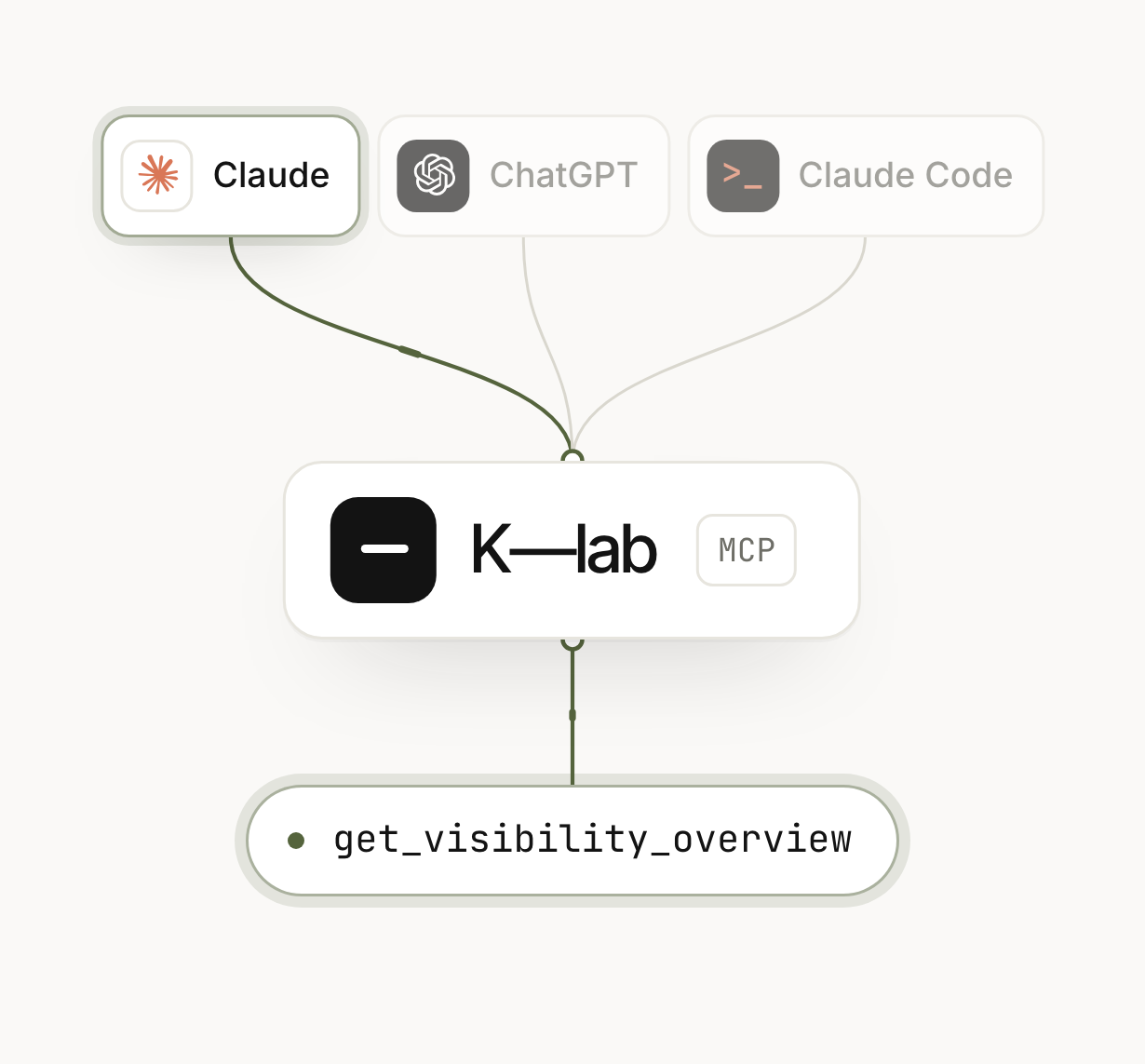
K—lab Cited measures how often ChatGPT, Copilot and Google AI Overview mention you and your competitors, and which sources the answers are based on. If you want to evaluate more options, we have put together a list of AI visibility tools and a comparison of K—lab with others.
Want to see the numbers for your company? Get the free report from K—lab.
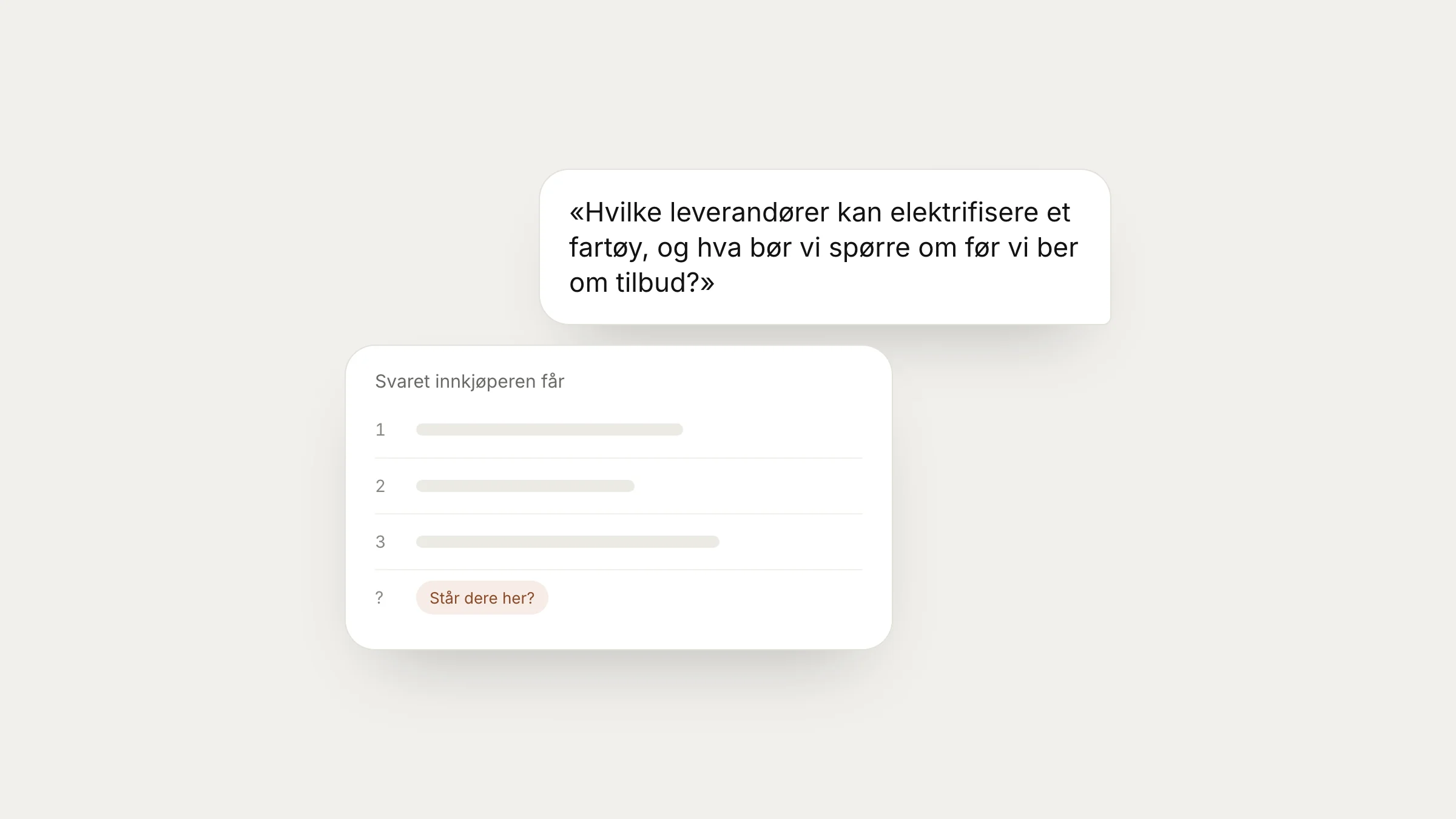
B2B companies with deep expertise should be chosen for what they can do, even when the buyer asks AI first. Here are the surveys, the numbers and where K—lab itself stands.
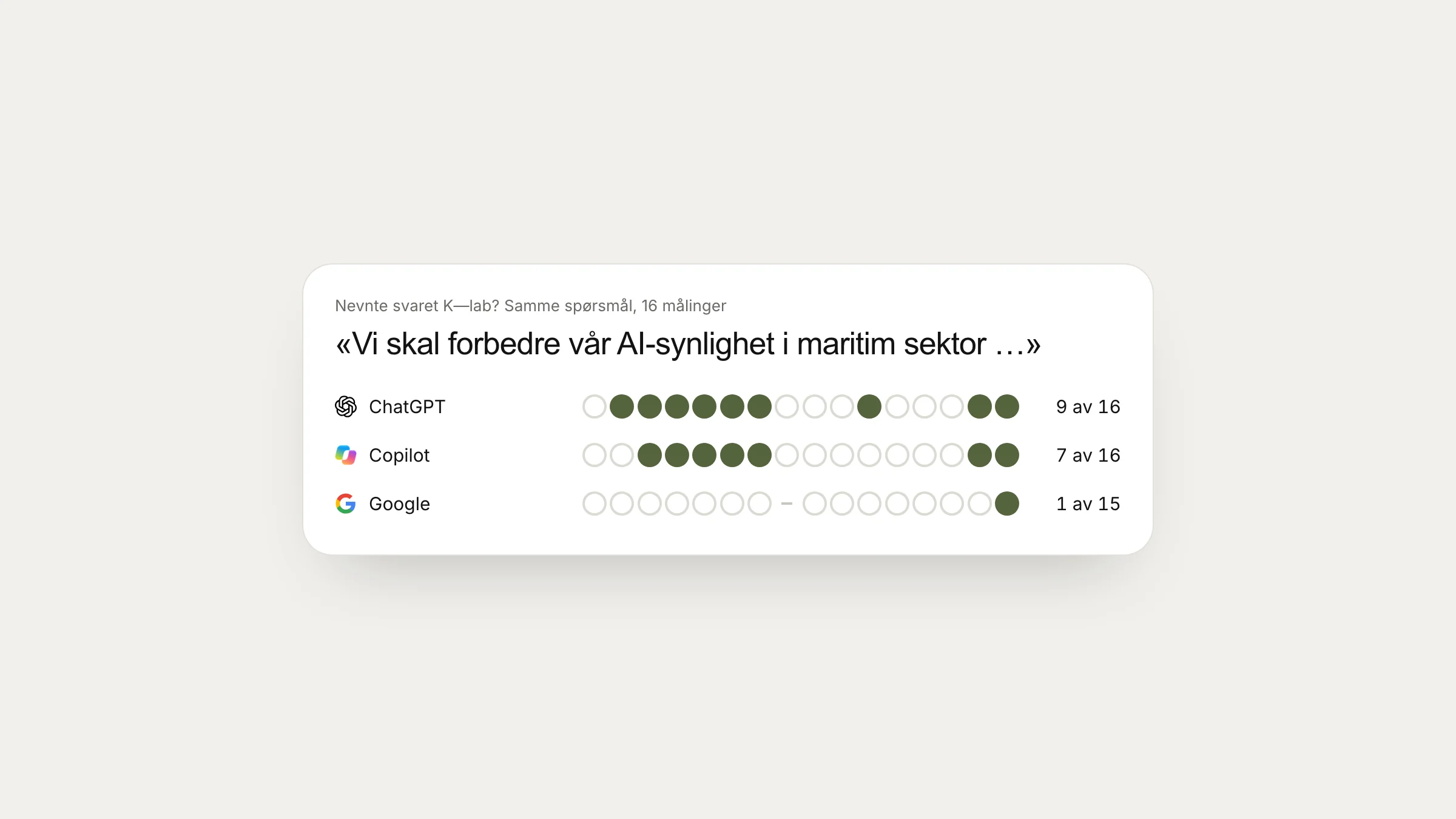
We asked ChatGPT and Copilot buyer questions every other day for a month. See how much the answers change, and why a single answer is only a snapshot.
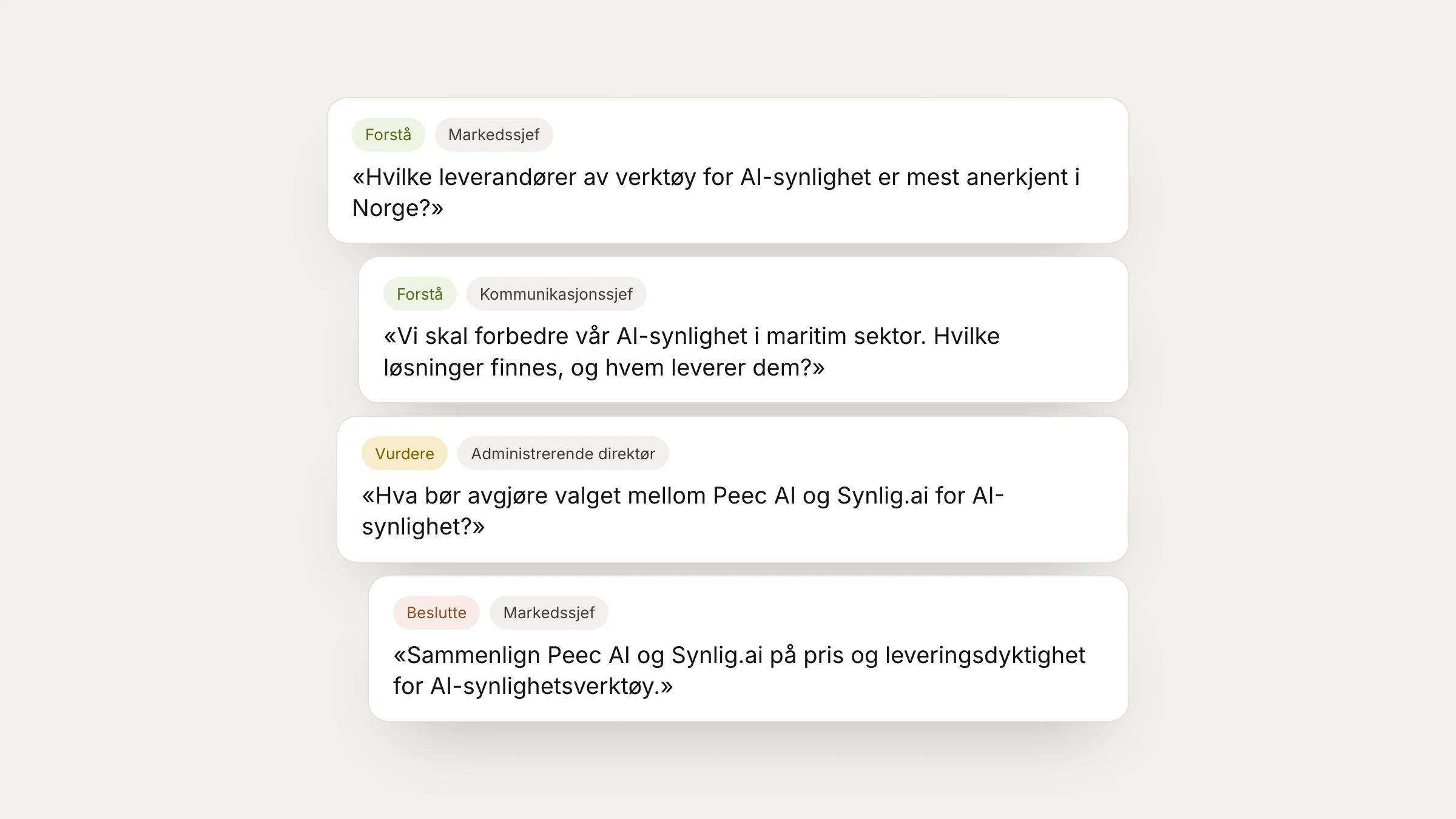
K—lab asks buyer questions written from buying situations in industry and the maritime sector. Here is how they are chosen, and how to build your own list.
Spend less time gathering and explaining results. Spend more time on the actions that actually deserve attention.