What is llms.txt? It is a text file at the root of your website that lists the most important pages in a simple format for language models, and Google says you can ignore it. The file is a proposal, not a standard. No one can promise that it will get you more mentions in AI answers.
A short overview of the website, written in Markdown, with links to the pages you want a language model to find. It sits in the same place as robots.txt, at yourcompany.com/llms.txt. A small example:
# Company name

> A short description of what the company delivers, to whom and where.

## Services
- [Service name](https://yourcompany.com/service): what it solves
The idea is that the model doesn't have to dig through menus and scripts. The format is used mostly on developer documentation sites. OpenAI's own developer documentation, for example, points to an llms.txt. For ordinary service pages, the benefit is unclear.
No. In its guide to AI search, Google writes that you can ignore steps such as creating unnecessary AI text files, like llms.txt, for Google Search. Google Search is also the source of AI Overviews. So you don't need the file to appear there.
OpenAI's documentation on its crawlers describes robots.txt as the way to control its crawler. The llms.txt file is not mentioned there. Nor have we found evidence that it changes how often AI mentions a company.
Not many. When we read the files on the most visited Norwegian websites, about one in ten had an llms.txt, according to the report on AI crawlers. So it is rare, and the sites without one have not lost anything because of it.
No. It is small and quick to make. The cost is maintenance: a file that lists outdated pages is worse than no file, so only create one if someone owns it. The upside may be that you gather your most important pages in one place, and that some tools can read it. But it should not come before the work that actually produces results.
If you have extensive technical documentation or API pages, the file can make things easier for developers who use AI tools in their editor. That is a different job from getting mentioned in answers to a buyer. For buyers, what counts is the pages on your website and what others say about you elsewhere.
These steps are recommended by the platforms themselves, or are simply good practice:
You can read more about how this fits together in the guide to getting visible in AI search.
By measuring. See how often ChatGPT, Copilot and Google mention you before and after a change, using the same questions. K—lab Cited does that work. Without measurement, llms.txt is just a guess.
Want to see where you stand today? Get the free report from K—lab.
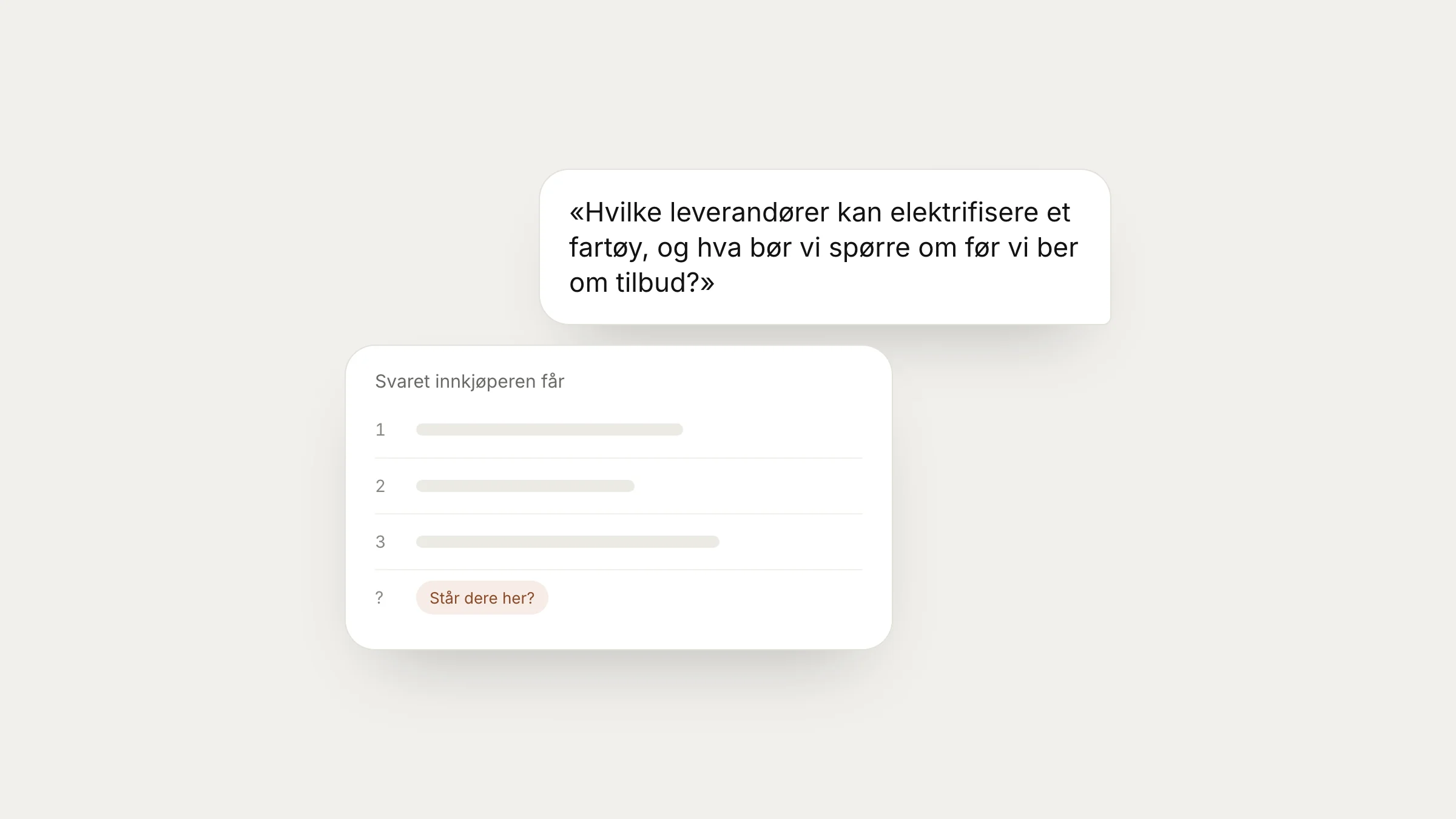
B2B companies with deep expertise should be chosen for what they can do, even when the buyer asks AI first. Here are the surveys, the numbers and where K—lab itself stands.
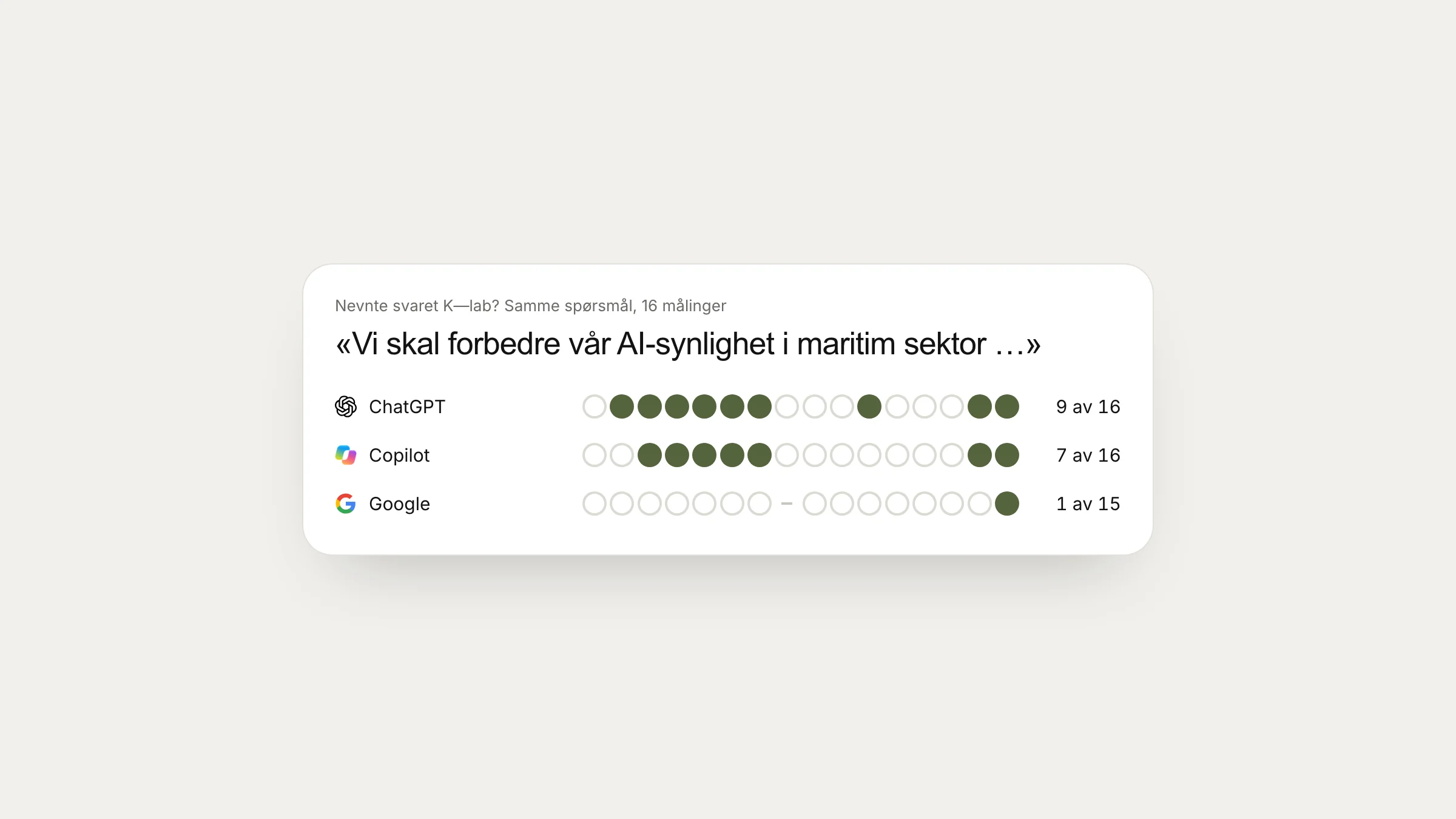
We asked ChatGPT and Copilot buyer questions every other day for a month. See how much the answers change, and why a single answer is only a snapshot.
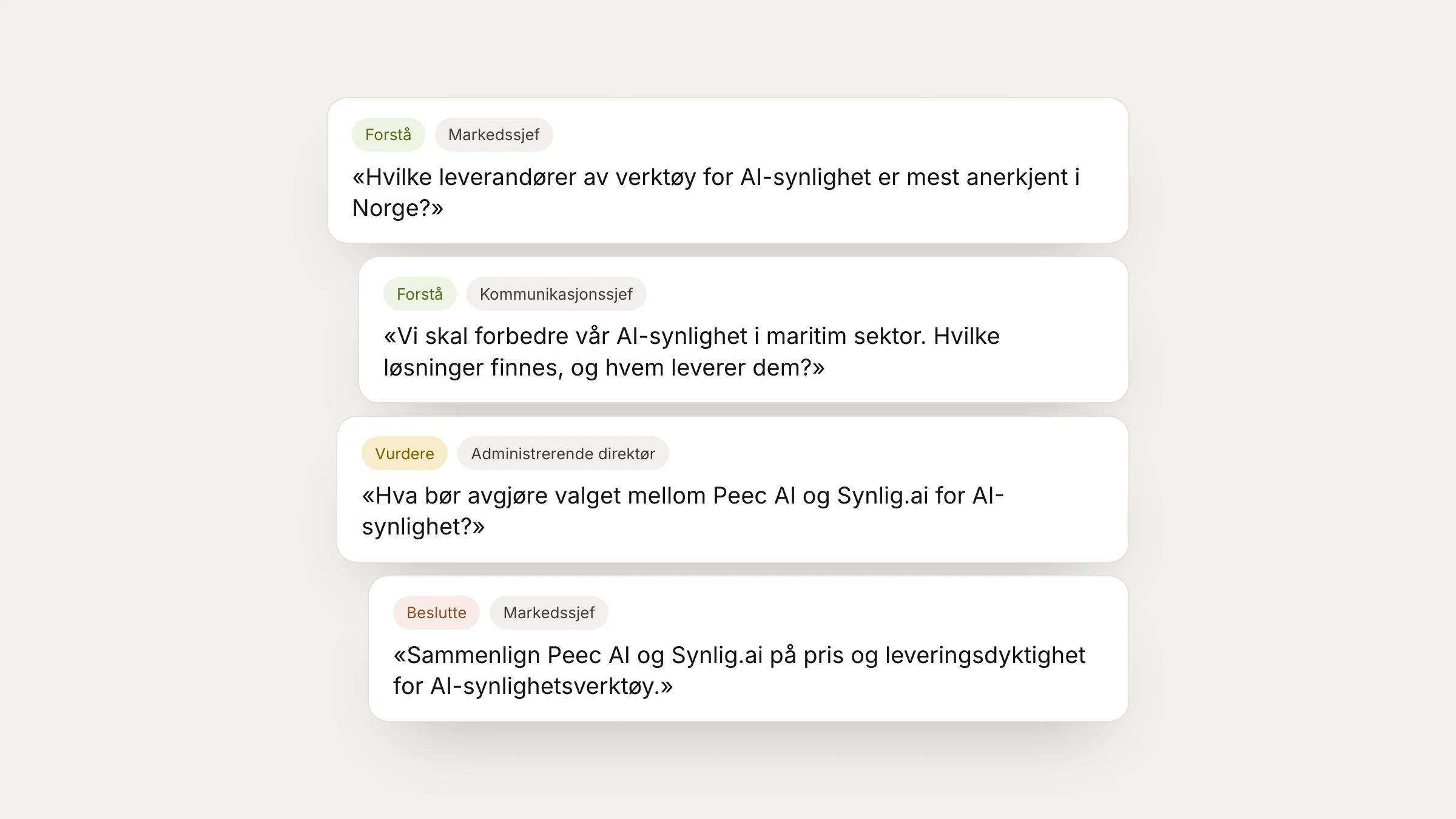
K—lab asks buyer questions written from buying situations in industry and the maritime sector. Here is how they are chosen, and how to build your own list.
Spend less time gathering and explaining results. Spend more time on the actions that actually deserve attention.