Here is a competitor analysis template you can use today: a table with one buyer question per row, and columns for who shows up in Google, who is mentioned in AI answers and why. Fill it in for your main competitors, and you will see where they are ahead.
Copy the table into a spreadsheet. Replace the text in brackets.
| Buyer question | Stage | Shows up in Google | Mentioned in AI answers | Sources used | What they have that we lack |
|---|---|---|---|---|---|
| Who supplies [product] in Norway? | Research | [who ranks at the top] | [ChatGPT, Copilot, Google: who is mentioned] | [domains] | [for example case studies, pricing page] |
| What is the difference between [A] and [B]? | Comparison | [ ] | [ ] | [ ] | [ ] |
| Who has experience in [industry]? | Decision | [ ] | [ ] | [ ] | [ ] |
Write the buyer questions the way a buyer would ask them, without company names. The “Stage” column sorts them into research, comparison and decision, since different competitors often win at different stages.
The last column is the most important. This is where you write what the competitor has that you lack, for example more case studies, a clearer pricing page or coverage in trade media. That column becomes your to-do list.
The table covers questions and visibility. Add a short profile of each competitor: who they sell to, what they promise on their homepage, which case studies they show and where they have been covered. Use only public information, and write down the date you checked.
Search for the question in a private browser window and write down who ranks at the top. Also check whether Google shows an AI Overview, and which pages it links to. We explain how the overview picks its pages in the article on Google AI Overview.
Ask ChatGPT and Copilot the same question. Write down which companies are mentioned, in what order, and which sources the answer links to. The answers vary, so repeat over several days before drawing conclusions. In our measurement of Norwegian B2B companies, the typical company was mentioned in about one in twelve answers. In other words, the norm is that you are missing from the answers, and then your competitors get the spot.
Doing this by hand for many questions takes time. K—lab Cited does the same thing automatically, across several platforms and over time. A separate guide explains how to set up the comparison.
The last one is often where you can win fastest. This article explains why competitors are sometimes visible when you are not.
Pick one gap at a time. If you are missing a page, create it with the answer in the first paragraph. If you are missing coverage, start with LinkedIn and the directories. Measure the same questions again after a month. If the change makes a difference, you will see it in the table.
If you need to choose a tool for the measurement, we have put together a list of AI visibility tools and a comparison of K—lab with others.
Want ready-made numbers for your own company? Get the free report from K—lab.
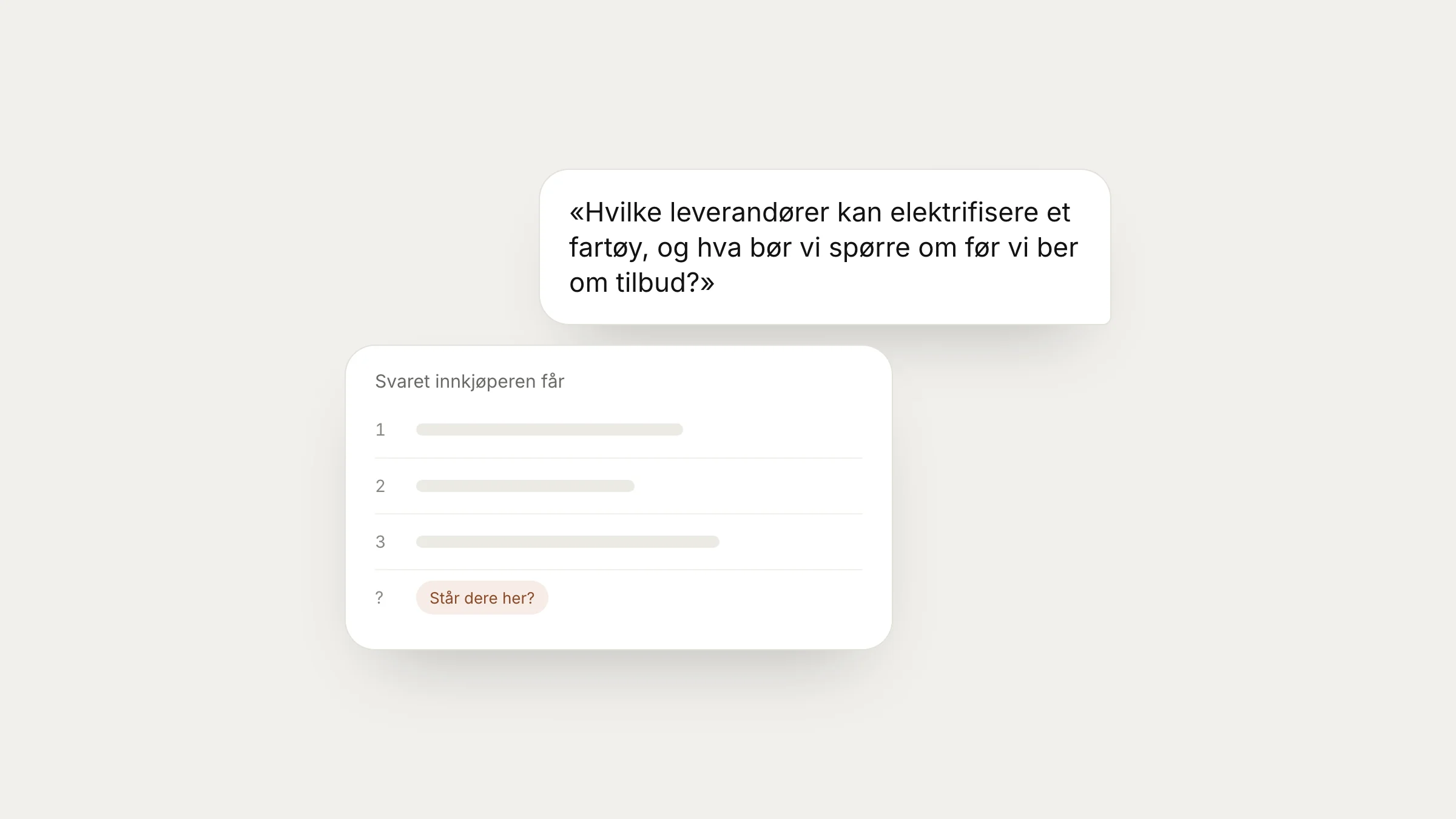
B2B companies with deep expertise should be chosen for what they can do, even when the buyer asks AI first. Here are the surveys, the numbers and where K—lab itself stands.
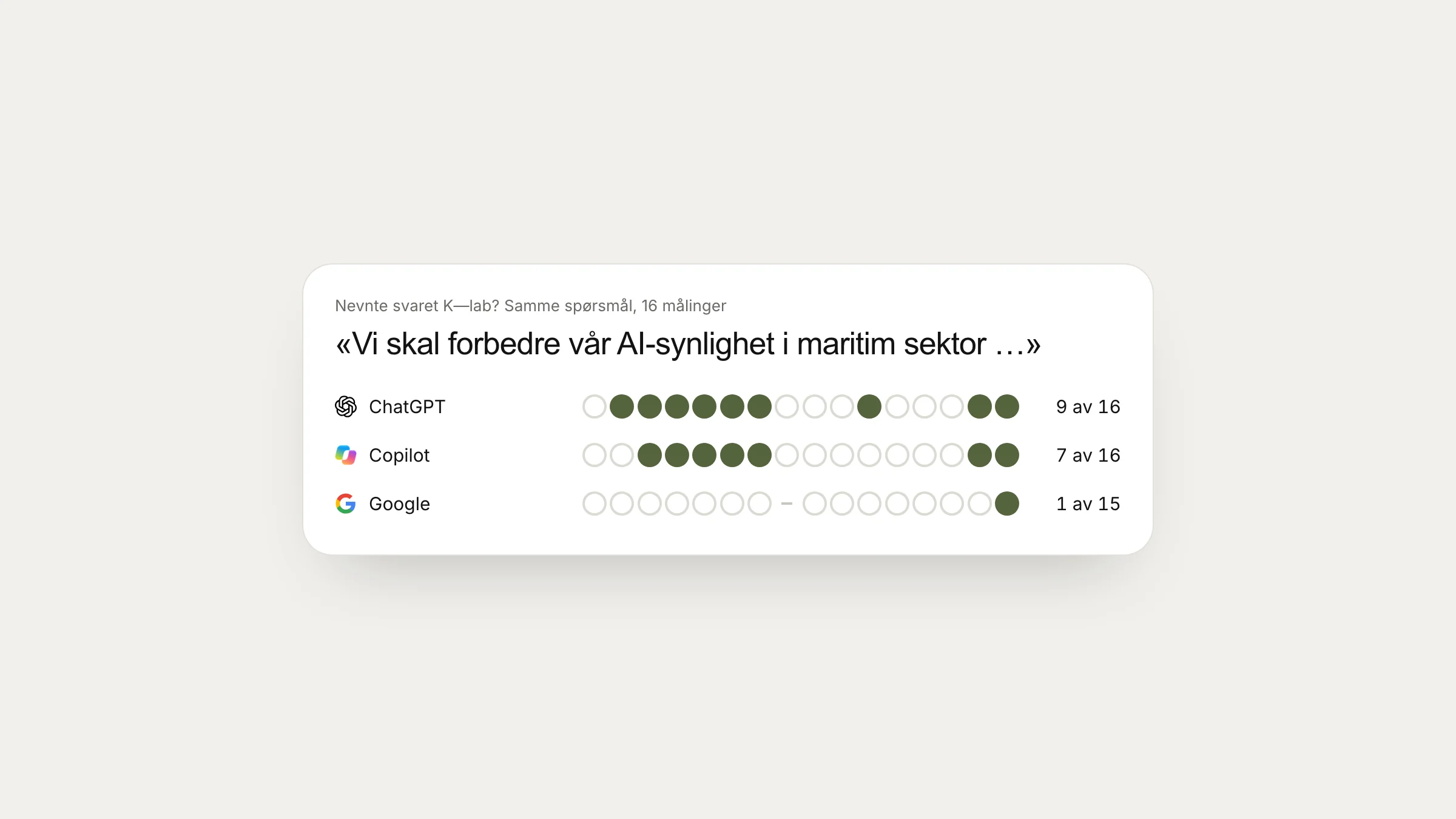
We asked ChatGPT and Copilot buyer questions every other day for a month. See how much the answers change, and why a single answer is only a snapshot.
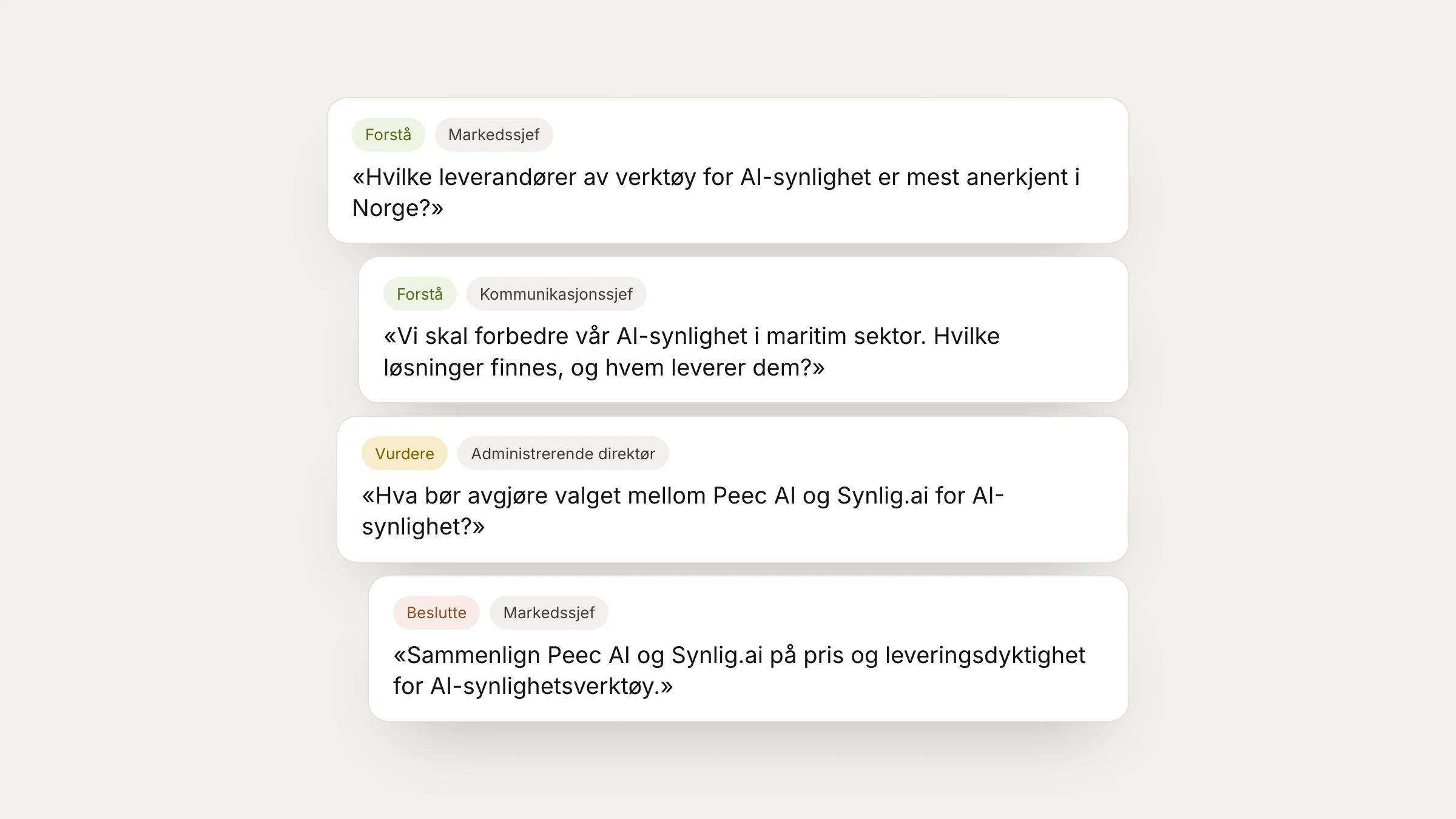
K—lab asks buyer questions written from buying situations in industry and the maritime sector. Here is how they are chosen, and how to build your own list.
Spend less time gathering and explaining results. Spend more time on the actions that actually deserve attention.