What are GEO and AEO? GEO and AEO are two names for almost the same work: making it more likely that AI tools like ChatGPT, Copilot and Google mention and cite you. GEO stands for generative engine optimization. AEO stands for answer engine optimization. Both are about becoming part of the answer itself rather than one more link in a list.
We explain GEO in a separate guide. Here we cover AEO and look at how the two fit together.
The difference is mainly the history behind the terms. AEO came first and described the work of getting your pages shown as answers in voice assistants and in the snippets at the top of search results. GEO came later and is a better fit when the answer is written by a language model.
In practice, you do the same things. You create pages that clearly answer the question the buyer asks, and you make sure the AI tools can find and read them. You will also come across the terms AI SEO and LLM SEO. We cover AI SEO and GEO in a separate article.
Google says the same about its own search engine. In its guide to AI search, Google writes that, from its side, AEO and GEO are ordinary search engine optimization, and that you can ignore tricks like splitting text into small chunks or creating special AI files.
Start with the fundamentals. Three things decide most of it:
No. A page that clearly answers a specific question, and that others mention, works for both. You do not need separate strategies or budgets. You need good pages and a way to see whether they work.
That is what the guide on how to get visible in AI search walks through, step by step.
A position in a list says little when the answer is a block of text. Instead, measure how often you are mentioned in answers to the questions buyers ask, and who is mentioned instead. In K—lab's measurement of Norwegian B2B companies, the typical company was mentioned in about one in twelve answers.
The answers vary from one time to the next. That is why you need to measure many questions, across several platforms and over time. K—lab Cited does exactly that. If you want to see which tools are available, we have a comparison of AI visibility tools.
Want to know where you stand? Get the free report from K—lab.
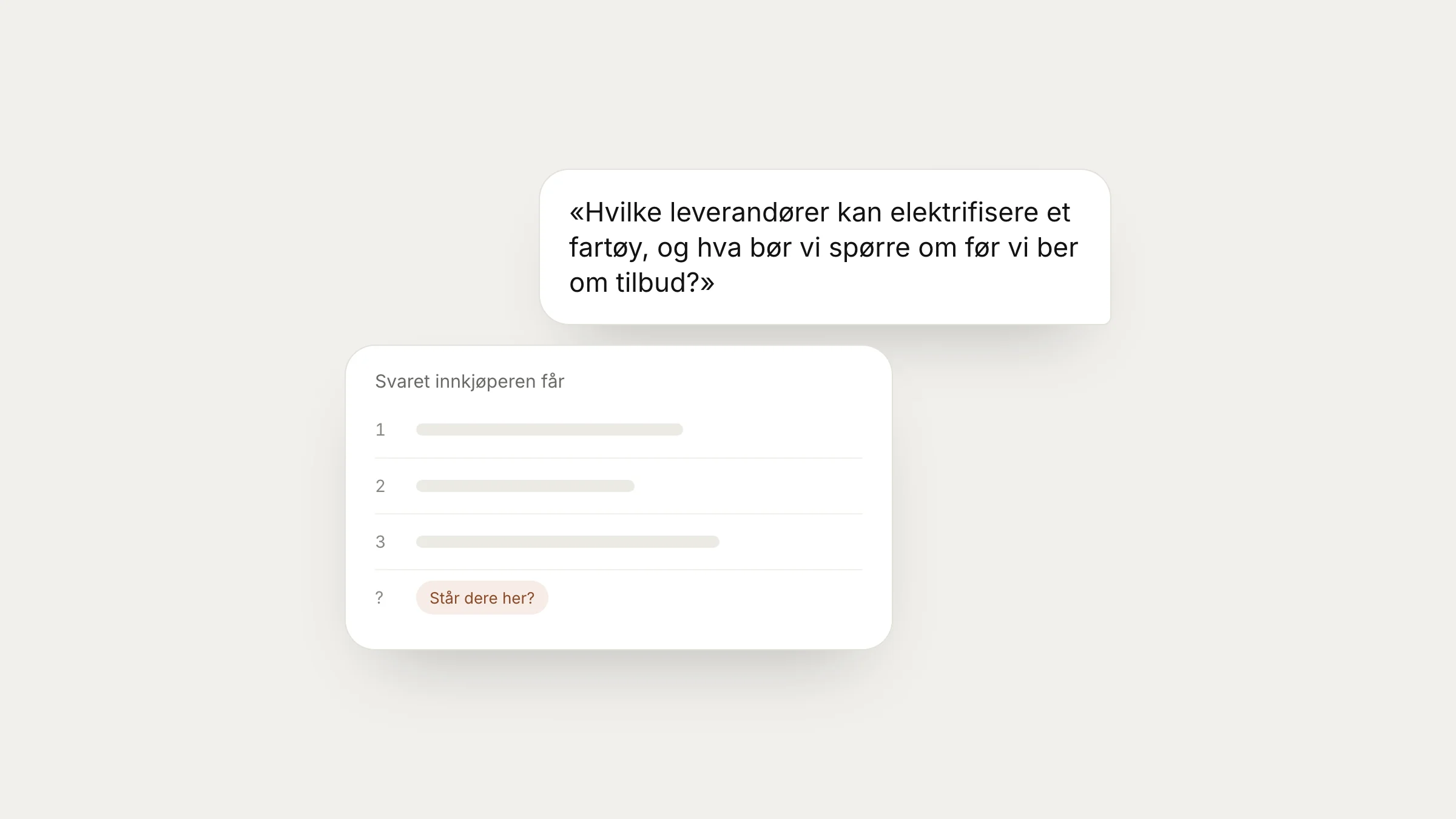
B2B companies with deep expertise should be chosen for what they can do, even when the buyer asks AI first. Here are the surveys, the numbers and where K—lab itself stands.
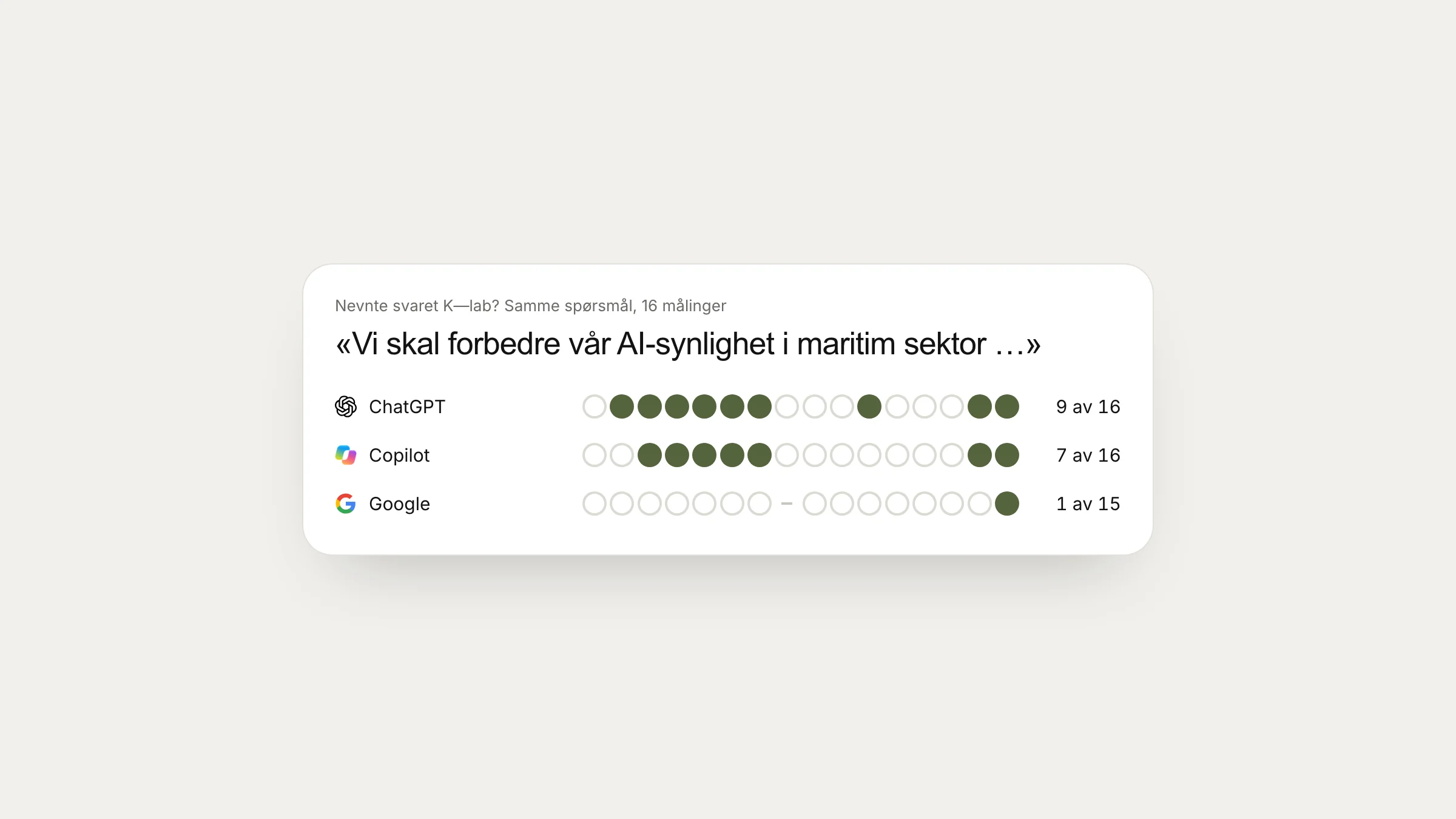
We asked ChatGPT and Copilot buyer questions every other day for a month. See how much the answers change, and why a single answer is only a snapshot.
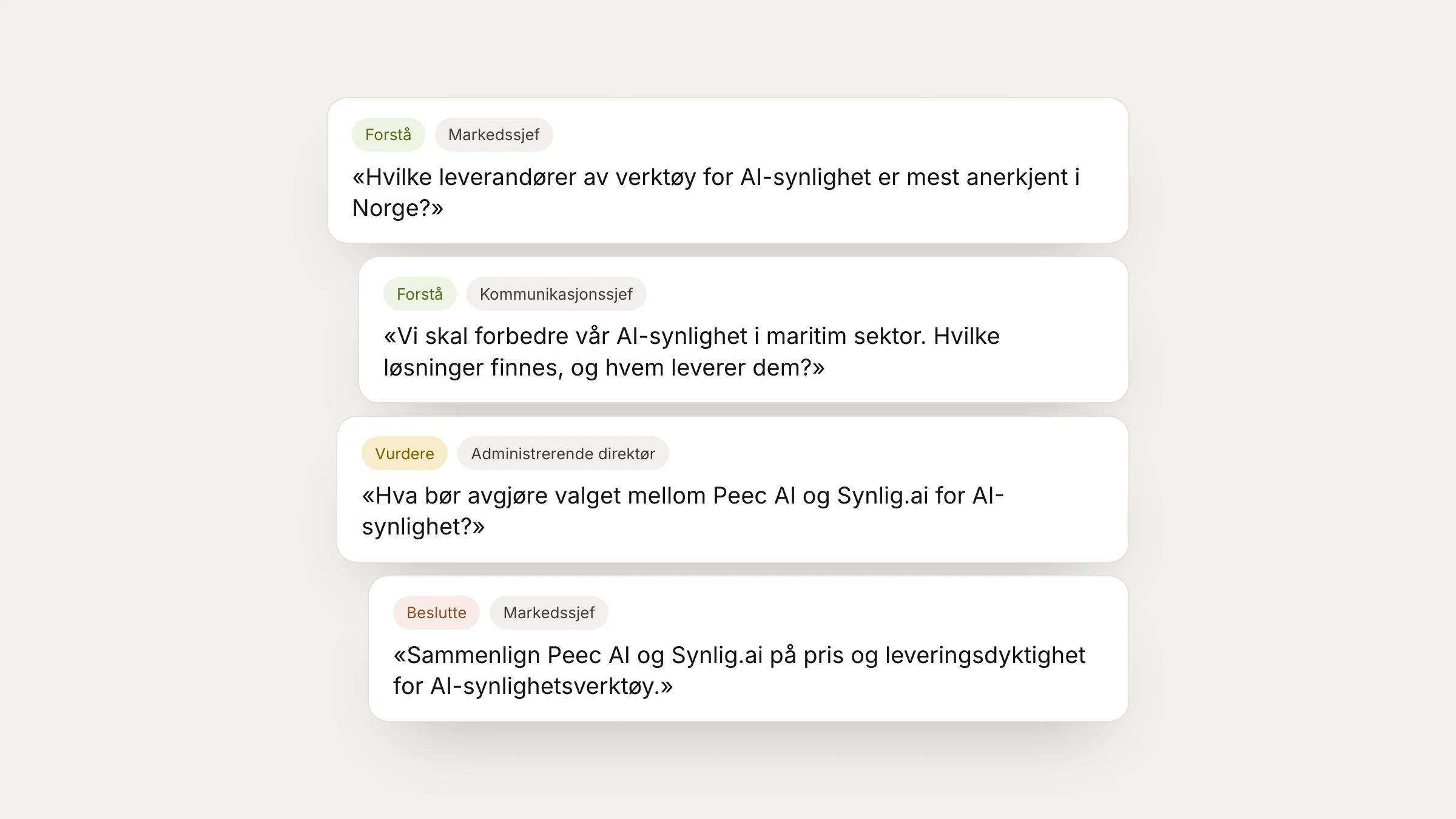
K—lab asks buyer questions written from buying situations in industry and the maritime sector. Here is how they are chosen, and how to build your own list.
Spend less time gathering and explaining results. Spend more time on the actions that actually deserve attention.